Guides · Does treadmill running translate to road running?
Does treadmill running translate to road running? The fitness does. The pace is the open question.
You finish your fall race, stop your watch and do the math. The pace comes out about twenty seconds a mile slower than the one your treadmill sessions said you could hold. Heat, hills and nerves all get the blame, and none of those answers touches the one number your whole block was built on.
Yes, the fitness translates. The paces may not, for two reasons. First, indoors you have no air to push through, and at steady training paces a 1 percent incline covers most of that. Second, every treadmill pace you trained at was a setting, and race day was the first one anything measured.
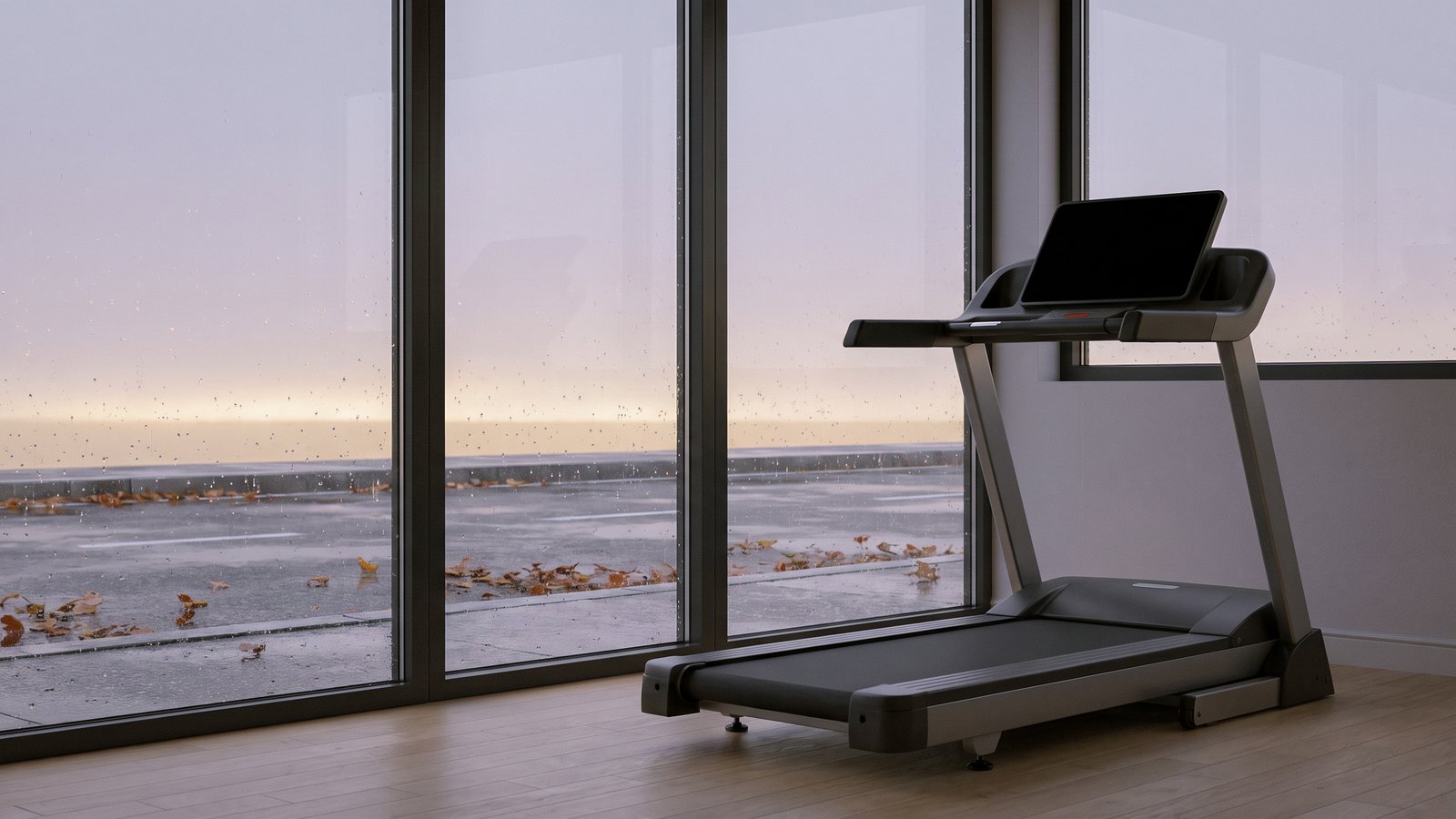
Two gaps sit between a treadmill pace and a road pace
Whether treadmill training transfers to road racing is really two questions, one for each gap. The first gap is effort. On the belt you push no air out of the way, and you lose the breeze that cools you when you run outside. At steady training paces, a 1 percent incline covers most of that gap. The guide on treadmill pace vs road pace has the study behind it and the settings to use.
The second gap is the number itself. The pace on the display was the speed you asked for. It went into your training log as if something had measured it.
Race day was the first measured pace of your block
A treadmill display shows the setting you chose. As far as I can find, nothing on the machine holds that setting up against the belt that is actually moving under you.
Picture a swimming pool that is a foot short. A swimmer trains in it all season and counts laps against the wall. Every split looks quick, because every lap is a little short. Nobody questions the pool, since the wall is where the wall is. Then the first meet happens in a pool of known length, the season's times fall apart, and the swimmer blames the taper, the nerves and the strange water.
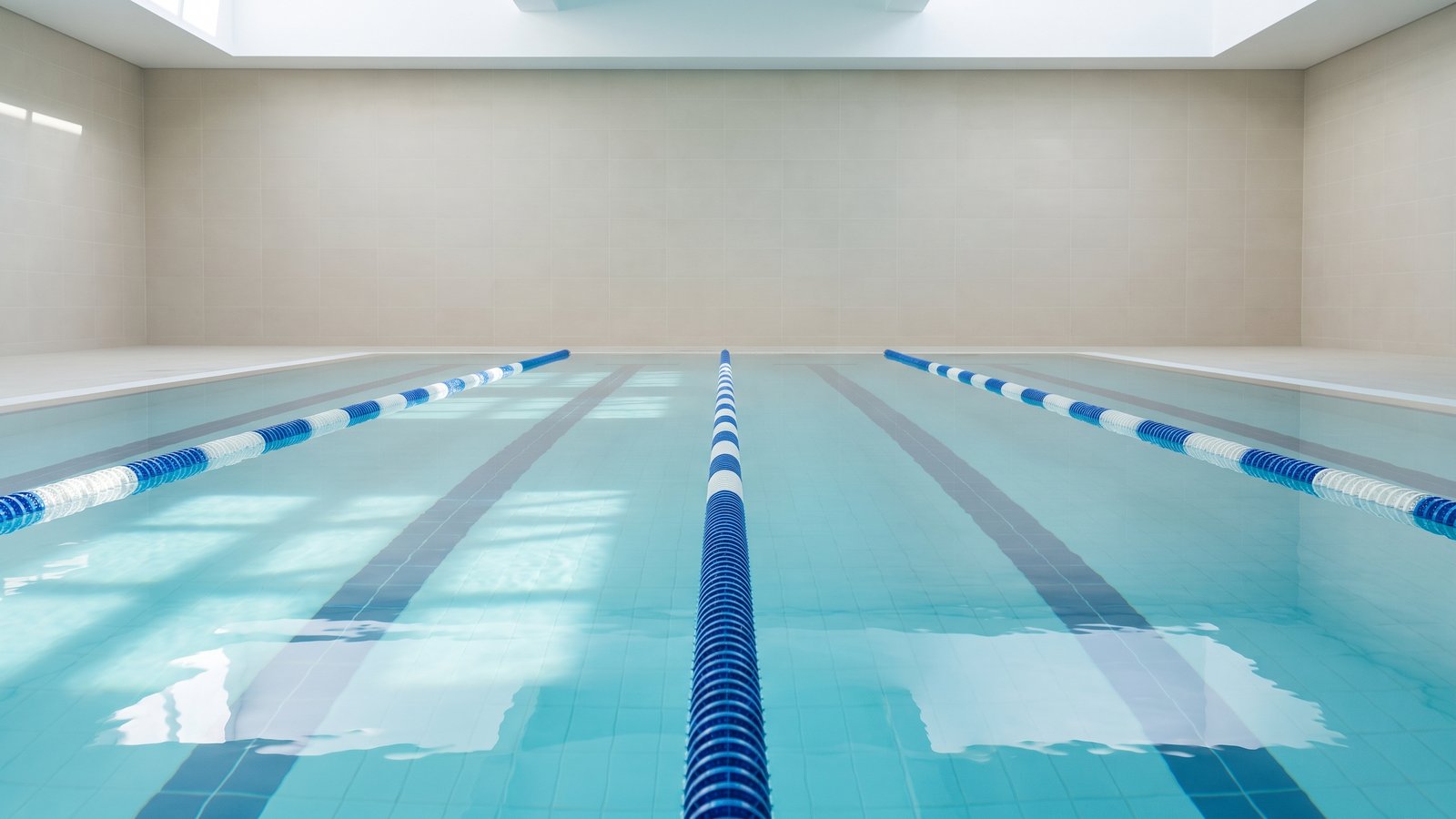
Your block ran the same way. Big road races are run on courses that were measured before race day, as the guide on marathon training on a treadmill only explains. Nothing in your block ever checked the belt that way. Your race was the first time your training pace met a distance that somebody had checked.
Why your training log could not warn you
Your training log shows both gaps the same way, as sessions that felt right and a race that did not match them. Nothing in the log can tell you which gap you hit. One thing narrows it. If you ran the block at 1 percent, you already closed most of the effort gap, and the belt is the one gap you have not checked. Your watch is no referee indoors either. It has no GPS to use, so it estimates your pace from the motion of your arm. Some watches also have you enter the treadmill's distance once the run ends. The guide on what your watch is really doing indoors explains what it was measuring on the belt, and why it could not catch a wrong speed.
What the belt gap is worth
Take a runner who did every goal-pace session at 6.9 mph. The display showed 8:42 a mile each time, and the table shows what that pace really was on four different belts.
One goal-pace setting of 6.9 mph on four belts
The display said 8:42 a mile in every row. The belts are invented for this example, and none of these numbers came from a machine I measured.
| Belt | Real speed (mph) | Real pace | Against the display |
|---|---|---|---|
| True | 6.90 | 8:42 | Matches the display |
| 2 percent slow | 6.76 | 8:52 | 10 seconds slower a mile |
| 4 percent slow | 6.62 | 9:03 | 21 seconds slower a mile |
| 2 percent fast | 7.04 | 8:32 | 10 seconds faster a mile |
Paces are minutes per mile. A lab study of four treadmills found belt speeds that averaged between 98 and 103 percent of what was set. The 2 percent rows sit inside that range, and the 4 percent row sits just outside it.
On the 4 percent slow belt, every goal-pace session you logged at 8:42 was really 9:03. Race day asked your legs for a pace they had never run.
A fast belt flips the result. On the 2 percent fast belt your sessions were really 8:32, so the race comes in quicker than the block promised and the goal you picked was too timid. If your goal came from a treadmill test, the guide on treadmill time trials shows how a display pace carries its error into a predicted finish time.
Before the next block, not after the next race
The effort gap is the easy one to shrink. Run your steady sessions at a 1 percent incline, since that gap is well understood and costs you nothing to fix.
The belt gap needs a measurement. Check the belt at your goal-pace setting on the machine you train on, before week one. Your next block then logs measured paces from the start, and your next race stops being the first measured pace you run. If the block moves between machines, each belt carries its own error, and the marathon guide above covers when to check again.
One check on the machine your block ran on
Treadwell runs that check at the setting you raced off. If that belt reads true, you can rule out the belt, and the gap most likely sits with effort, heat or the course. If it reads slow or fast, you have your answer, and the next block starts from a measured pace. Run the belt empty at your goal-pace speed, then aim your iPhone down at the moving surface from the floor beside the machine. Its camera and LiDAR sensor time the belt itself, so the answer never passes through the number you typed in. The app needs an iPhone Pro for that LiDAR sensor.
Start the next block on a measured belt
See the speed your belt really holds at your goal-pace setting, so the next training log starts true. Treadwell runs on iPhone Pro models, which carry the LiDAR sensor.
 Scan with your iPhone Pro to get the app
Tested: in our tachometer tests the app read within about 2 percent of true belt speed.
Quick answers
Does treadmill running translate to road running? Yes, the fitness translates. The paces may not, for two reasons. First, indoors you have no air to push through, and at steady training paces a 1 percent incline covers most of that. Second, every treadmill pace you trained at was a setting, and race day was the first one anything measured.
Why did my race come in slower than my treadmill workouts? Two gaps can do it. The effort gap comes from running with no air to push through, and the belt gap comes from training paces that were settings rather than measurements. One race cannot tell you which gap was bigger, because a slow belt and the effort gap both leave the road pace slower than the log. A belt can also run fast, and then the race comes in quicker than the workouts promised.
Can my watch tell me which gap it was? No. Indoors your watch works without GPS, so it has nothing outside the run to check the belt against. On race day the course had already been measured, and that is why the road gave you a number your treadmill sessions never did.
Sources.
- The incline figure: Jones AM and Doust JH (Journal of Sports Sciences 14(4):321-327, 1996) tested nine trained male runners between roughly 5:22 and 9:11 a mile. Over short, steady efforts, a 1 percent grade matched the energy cost of running on a level road.
- The lost breeze outdoors: Yamashita N, Ly CL, Smallcombe JW, Hodder S and Havenith G (Journal of Applied Physiology 137(3):554-568, 2024) ran a wind tunnel study of 14 people on how moving air changes cooling. It backs the point that the breeze you make running outside is missing on a treadmill.
- The claim that nothing compares the setting with the belt is my own reading of the treadmill service manuals I could get. It covers those manuals only.
- Watches indoors: Apple Support article 105002 says the Apple Watch uses its accelerometer for indoor runs. Garmin's Forerunner manuals (165, 255, 265, 955, 965 and 970) offer a step that asks for the distance the treadmill showed, and the Forerunner 165 manual says GPS is off indoors.
- Belt speeds of 98 to 103 percent of the setting are from a 2021 study in which seven people walked and ran on four laboratory treadmills, two of them force-measuring research machines (Willwacher et al., Scientific Reports 11:2244).
- Measured race courses are sourced on the marathon training guide linked in the body.
- The 6.9 mph runner, the four belts and the pool are illustrations built for this page, not readings from a machine I measured.