Guides · Rucking on a treadmill
Rucking on a treadmill: is your ruck pace real?
You clip the waist strap, set the belt to 4.0, and start walking. Three hours later the display shows 12 miles at 15:00 a mile, right on the cutoff you have been training for. Yet that 4.0 is only what you asked the machine to do. Nothing in it checked what the belt did under you and your pack.
Yes, you can ruck on a treadmill. The speed it shows is the setting. Nobody measured the belt. At ruck speeds a belt running 2% slow costs about 18 seconds a mile, so a 15:00 goal pace can really be 15:18.
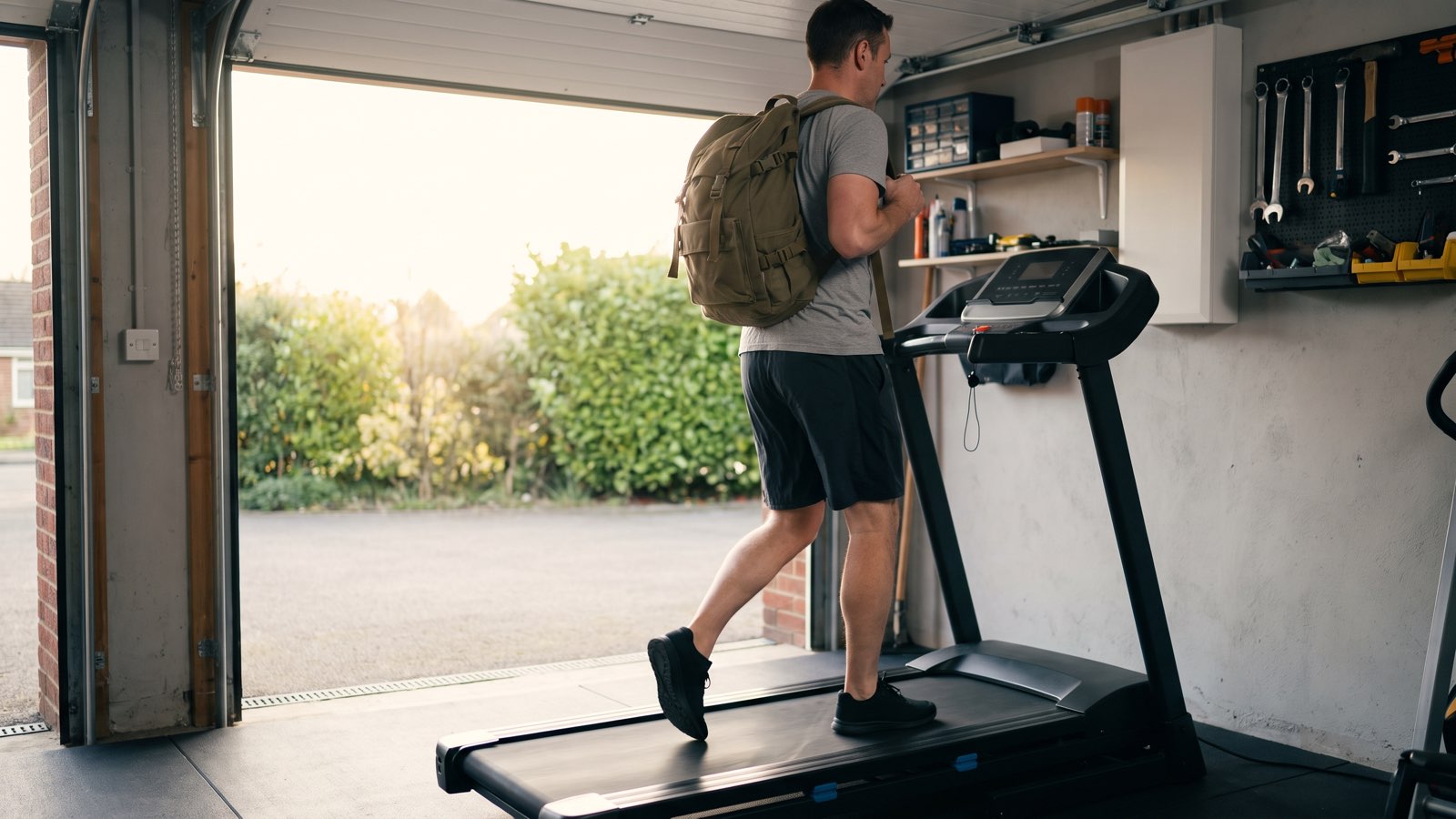
Yes, and it is a fair place to train
A treadmill suits a ruck well. The belt sets one pace while you settle under the weight, so you can learn what a steady effort feels like without hills or traffic pulling you off it. You can also raise the grade with a button when you want the work to feel more like a trail.
That grade is a setting too. The display shows the angle you picked, which the deck may or may not match. That question has its own page on treadmill incline accuracy.
The number on the display is a request
When you press 4.0, the motor gets a target. The display keeps showing that 4.0 for the whole session, and it never measures the belt to report back.
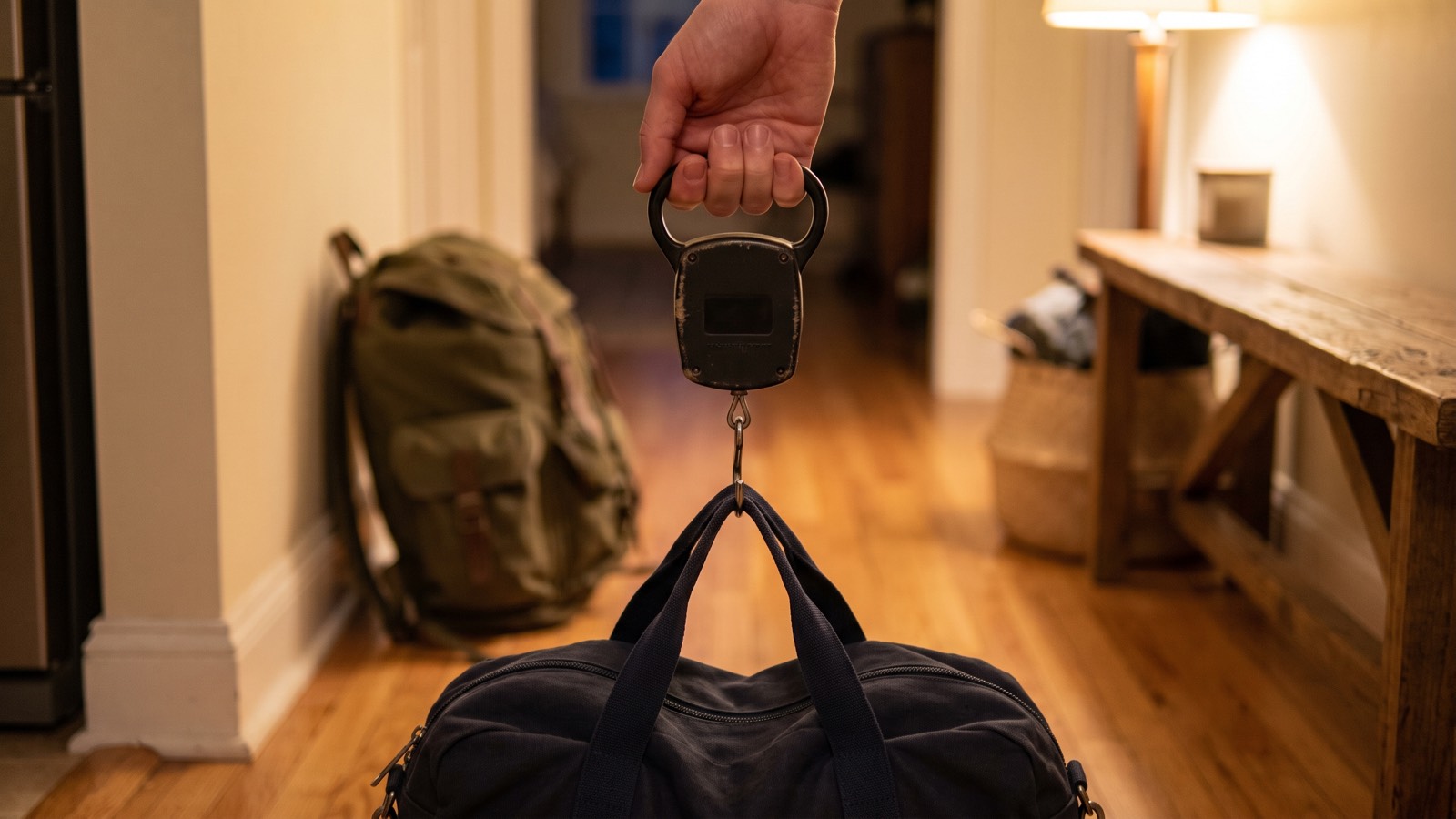
Think of a luggage scale at home that reads a few pounds light. In the hallway, your bag makes the 50 pound limit with room to spare. You only learn the truth at the airline counter, when the agent tells you to start pulling things out. On a treadmill, the display is the hallway scale. Your timed ruck outside, on a measured route with a watch, is the counter.
So how far off can a belt be? In one lab study, four treadmills ran at average speeds between roughly 98 and 103 percent of their settings with people walking and running on them. One of the four had a substantially worn belt and deck. Those percents look small. Two things about rucking deserve a closer look: the slow pace and the weight on your back.
Your pack is extra weight on the belt
Few treadmill workouts add weight on purpose, and rucking is built around it. You do it at walking speed, and you often do it to hit a fixed pace. Each time a foot lands, it pushes against the belt and slows it for a moment, and the motor then pulls it back up. Two lab studies found that the belt generally dipped or swung more under heavier people in those moments.
The studies tested body weight, not packs; no study we found tested a pack. Still, the belt cannot tell your body from the load on your back. It carries the total that lands on it, so it is fair to reason that a loaded walker presses on it the way a heavier one does. That is our reasoning. What you can check is the part that exists before any pack goes on: how far your belt's steady speed sits from the setting with nobody on it. The extra give under a load stays an open question. The guide on whether a treadmill belt slows down when you run on it explains the dip itself.
Why walking pace shows the error most
A slow belt costs you the same share of every mile, at any speed. A walking mile simply lasts longer than a running mile, so that same share adds up to more seconds. To see what a steady offset does to the distance of a whole session, see the guide on how a small offset adds up over a long run.
Seconds a slow belt adds to each mile
Our arithmetic. The setting is what the display shows; the belt speed is what it really moves.
| Setting, mph (pace) | Belt runs | Real speed, mph | Real pace | Seconds lost per mile |
|---|---|---|---|---|
| 4.0 (15:00) | 1% slow | 3.96 | 15:09 | about 9 |
| 4.0 (15:00) | 2% slow | 3.92 | 15:18 | about 18 |
| 8.0 (7:30) | 2% slow | 7.84 | 7:39 | about 9 |
What it costs your ruck goal
One well-known timed ruck is 12 miles in 3 hours with a 35 pound pack, the foot march the Army described for its Expert Infantryman Badge in 2016. On a belt that runs true, it works out to 15:00 a mile, or 4.0 on the display.
Say your machine runs 2% slow, a made-up belt inside the 98 to 103 percent that lab study found. That is the middle row above: you set 4.0 and every mile is really 15:18 while the display says 15:00. That study saw bigger average errors at running speeds than walking speeds, so treat 2% as a possible size, not a typical one.
Trained to the display, you held 15:18, not 15:00, and the treadmill never showed you the gap. Some belts run fast instead, and then you are quicker than the display says. Only measuring the belt tells you which way yours leans.
Check the speed you ruck at
The effort under your pack is real, and so is the clock. The belt speed is the one number in a treadmill ruck that you have never checked. Treadwell gets that number from the belt, with the LiDAR and camera built into an iPhone Pro. Take your reading at the exact setting you ruck at, for example 4.0 for the 15:00 goal above, with the deck clear and the belt up to speed. That shows what the setting delivers before your load pulls on it. Then pick the setting whose real speed gives your goal pace.
Find your real ruck pace
Read the belt at your ruck setting before your next long session under the pack. Treadwell needs an iPhone Pro, because the reading relies on its LiDAR sensor.
 Scan with your iPhone Pro to get the app
Quick answers
Can you go rucking on a treadmill? Yes, you can ruck on a treadmill. The speed it shows is the setting. Nobody measured the belt. At ruck speeds a belt running 2% slow costs about 18 seconds a mile, so a 15:00 goal pace can really be 15:18.
What speed should I ruck at on a treadmill? Use whatever setting gives you your goal pace on the belt you have. On a belt that runs true, a 15:00 mile is 4.0 mph. Your belt may not run true, so read its real speed at the setting you plan to use, then nudge the setting until the real speed matches the pace you are after.
Is rucking on a treadmill effective? Yes, as a way to put in the time under the pack. You carry the same pack and spend the same hours on your feet, and you can add grade whenever you like. What a treadmill session cannot prove on its own is your pace. That takes a check of how fast the belt really moves at your setting.
Sources.
- Belt speed and body mass, walking and running: Willwacher and colleagues, Scientific Reports, 2021 (volume 11, article 2244). Seven volunteers walked and ran on four treadmills; one machine was substantially worn. Across the four machines and all speeds, the averages stayed within roughly 98 to 103 percent of each target speed. With higher body mass the belt lost more speed in the braking part of each step. The size of the body-mass link changed with speed and with the machine. Averaged over all four machines, the gap between belt speed and target was larger at running speeds than at walking speeds.
- Belt speed and body weight, walking only: Tielke, Ahn and Lee, Scientific Reports, 2019 (volume 9, article 12755), on one instrumented lab treadmill. The swing in belt speed within each stride grew as walking got faster and as the walker got heavier.
- No pack study: both studies used body weight alone. A PubMed search on 2026-10-09 for belt speed changes under load carriage returned no studies, which is why the pack point on this page is reasoning, not a finding.
- The 12 miles in 3 hours with a 35 pound rucksack: U.S. Army, "Soldiers to earn the arduous Expert Infantryman Badge", army.mil, May 11, 2016. It is a 2016 Army article about the Expert Infantryman Badge; not a treadmill standard and not quoted as the current requirement.
- My own notes: the pace table and the belt running 2% slow are my arithmetic and a made-up example, not a machine I measured. The luggage scale is an illustration.