Guides · Strava best efforts on a treadmill
Does Strava count treadmill runs for best efforts?
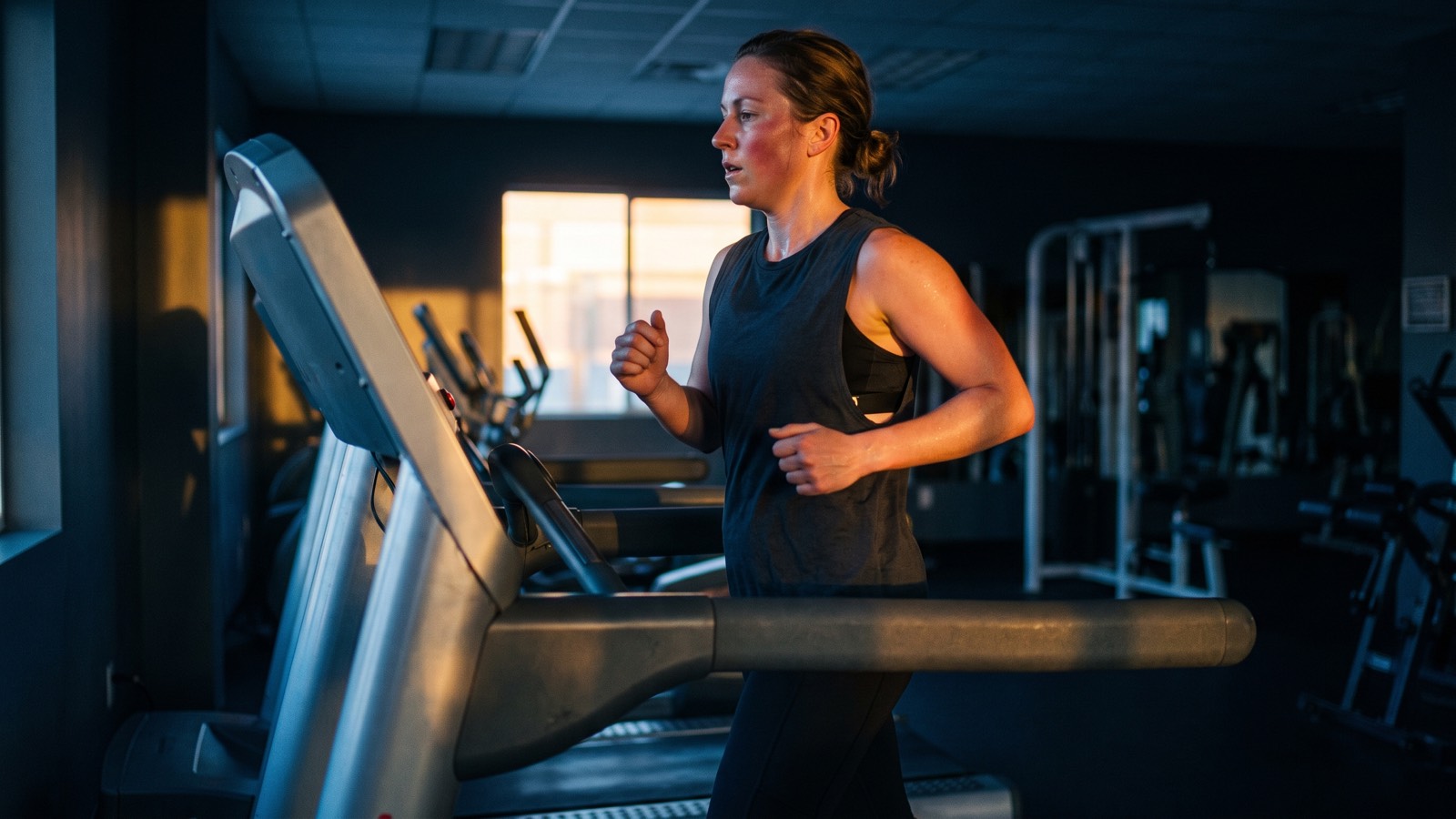
You run a hard 5K on the treadmill and stop the clock at 22:00 the moment the display says 5 km. Strava shows the run, but it is missing from your best efforts list and no PR banner appears. You start to wonder whether the time counts at all.
Strava builds best efforts from GPS data, and a treadmill run never moves across the map, so it can give that list little to work with. A missing entry is Strava's rule, not a verdict on your run. The number worth doubting is the distance, because the display gives you no proof the belt matched it.
Why Strava skipped your treadmill run
Strava builds a best effort from GPS data, and it only trusts a stretch with clean points. Missing or stray points take that stretch out of the running.
The three Strava help pages we read do not mention treadmills, so what follows is our reasoning. On a belt you stay in one spot. A list built from the map has nothing honest to read, and a run recorded with GPS on can hand it stray points instead. The skip is what the rule predicts, and it says nothing about how fast you ran.
Some treadmill runs may still show a best effort, built from the distance your watch or app wrote into the file. That time is only as good as that distance. Our guide on why your Strava treadmill distance is wrong covers where that number comes from.
Strava's own PR rule asks the real question
Strava also lets you add an All-Time PR by hand. It defines one as your fastest time in an official race or over a verified known distance. On a treadmill the clock is the easy half. The hard half is the distance, which the display works out from its own speed reading and the minutes that passed.
Think of a taxi meter. The fare prints to the cent, and you trust it because meters like it are normally tested against a measured stretch of road. Your treadmill may be a meter nobody checked. Its clock is exact. The distance it prints is the machine's own count of how far the belt should have moved, and unless someone has held that count against the belt, you have no proof it is right.
If you are chasing a time on a treadmill leaderboard, our guide to the RUN X World Treadmill Championship 5K covers what its rules do and do not describe.
What a small belt error does to your 5K
A lab study of four treadmills, two of them research machines, found their average belt speeds fell between about 98 and 103 percent of the speed they were set to. Picture a made-up belt at the slow end of that span, running 2 percent slow. When its display says 5 km in 22:00, the belt has carried you about 4.9 km. At the pace you really held, a true 5K takes about 22:27.
| The belt runs | Display says | Belt carried you | Your true 5K time |
|---|---|---|---|
| 2 percent slow | 5 km in 22:00 | about 4.9 km | about 22:27 |
| Right on | 5 km in 22:00 | 5.0 km | 22:00 |
| 3 percent fast | 5 km in 22:00 | about 5.15 km | about 21:22 |
If you plan your next road 5K from that 22:00 on the slow belt, you start about 9 seconds a mile faster than you have shown you can hold. Over 3.1 miles, that adds up to close to half a minute you would be asking your legs to find on race day.
The fast belt works the other way. At 3 percent fast, it carried you about 5.15 km by the time the display said 5, so your true 5K came at about 21:22. That run was quicker than the display said, and the effort Strava skipped may beat the best time on your list. The display reads 22:00 on both belts, so it cannot tell you which run you had. The same doubt sits under a virtual race run on a treadmill, where the time you submit is only as good as the belt.

Check the belt the 5K ran on
Strava's list follows its own rule, and checking the belt will not change it. What you can find out is whether the 5K on the display was 5K. There are three ways to check.
- A handheld tachometer held to the moving belt reads its speed directly, and it is the tool we check Treadwell against. It costs money, and you need the machine to yourself for a few minutes.
- Counting belt laps with a tape measure and a stopwatch costs nothing. Our guide to testing a treadmill walks through it without marking the belt.
- Set the belt to your 5K speed and aim an iPhone Pro at it. Treadwell reads how fast the belt really moves with the camera and LiDAR sensor.
Treadwell cannot put a run on Strava's list. It can tell you how far the belt sits from the speed you set, so you know what the next 22:00 on the display is worth at that speed.
Find out if your treadmill 5K is 5K
Read the belt once at your 5K speed and learn what the next 22:00 is worth. The camera and LiDAR sensor do the measuring, so Treadwell needs an iPhone Pro.
 Scan with your iPhone Pro to get the app
Quick answers
Does Strava count treadmill runs for best efforts? Strava builds best efforts from GPS data, and a treadmill run never moves across the map, so it can give that list little to work with. A missing entry is Strava's rule, not a verdict on your run. The number worth doubting is the distance, because the display gives you no proof the belt matched it.
Why did my treadmill run not get a PR on Strava? Strava says best efforts need good GPS data, and any stretch with missing or stray points is not eligible. A treadmill run stays in one spot, so by our reasoning it gives that rule nothing true to read. The missing PR tells you about Strava's rule, not your pace.
Can I add a treadmill 5K as an All-Time PR on Strava? Strava lets you enter an All-Time PR by hand, and it defines one as your fastest time in an official race or over a verified known distance. Strava's page does not say whether a treadmill distance counts as verified. On a treadmill the time is exact, but the distance is the machine's own count, and the display gives you no proof it matches the belt.
Is my treadmill 5K time real? The time is real. The distance under it is only as good as the belt. In a made-up example, a belt 2 percent slow turns a 22:00 display 5K into about 22:27 for a true 5K.
Sources.
- Strava Support, "Troubleshooting Best Efforts," https://support.strava.com/hc/en-us/articles/216917127 (read November 6, 2026): best effort times are tracked automatically with GPS data; Strava requires good quality GPS data to calculate a best effort, and a part of an activity with missing points, errant points or false accelerations is not eligible; you can create an All-Time PR to get credit for the effort. The page does not mention treadmills or indoor runs.
- Strava Support, "All-Time PRs," https://support.strava.com/hc/en-us/articles/216918487 (read November 6, 2026): All-Time PRs are entered by hand and are a runner's fastest time over a distance in an official race or over a verified known distance, while best efforts are tracked automatically with GPS data. The page does not mention treadmills.
- Strava Support, "Best Efforts Overview," https://support.strava.com/hc/articles/19685360245005 (read November 6, 2026): performances are tracked automatically from GPS and power data, and a running effort can be edited or removed. The page does not mention treadmills.
- Treadmill belt speed versus the set speed: Willwacher and colleagues, Scientific Reports, 2021 (vol. 11, article 2244). Four laboratory treadmills were tested with people walking and running on them, and their average belt speeds fell between roughly 98 and 103 percent of the speed that was set. Two of the four were force-instrumented research treadmills, one of them substantially worn; the other two were a high-cost and a low-cost machine without instruments. These are lab results, not a survey of gym machines.
- Notes from this page: the 22:00 run, the three belts in the table and the 9 seconds a mile are made up, and the arithmetic is mine. The taxi meter is an illustration, not a claim about how any city tests its meters. Reading a skipped treadmill run as Strava's GPS rule at work, and a treadmill best effort as built from the distance a device wrote, is our reasoning, not a Strava statement. Saying a treadmill may never have been checked is not a claim about every machine; makers and some gyms do calibrate them. No watch, app or treadmill was tested for this page.