Guides · Strava treadmill distance
Why your Strava treadmill distance is wrong
You step off the treadmill. The display says 5.00 and Strava says 4.72. Last week it said 5.31. You want to know which number goes in your training log, and whether either one is real.
Your Strava treadmill distance is off because Strava does not measure your treadmill run. It logs the distance your watch or app sent it, and indoors that number is an estimate from your wrist, a GPS track that wanders under a roof, or a copy of the treadmill's display. None of those three measured the belt.
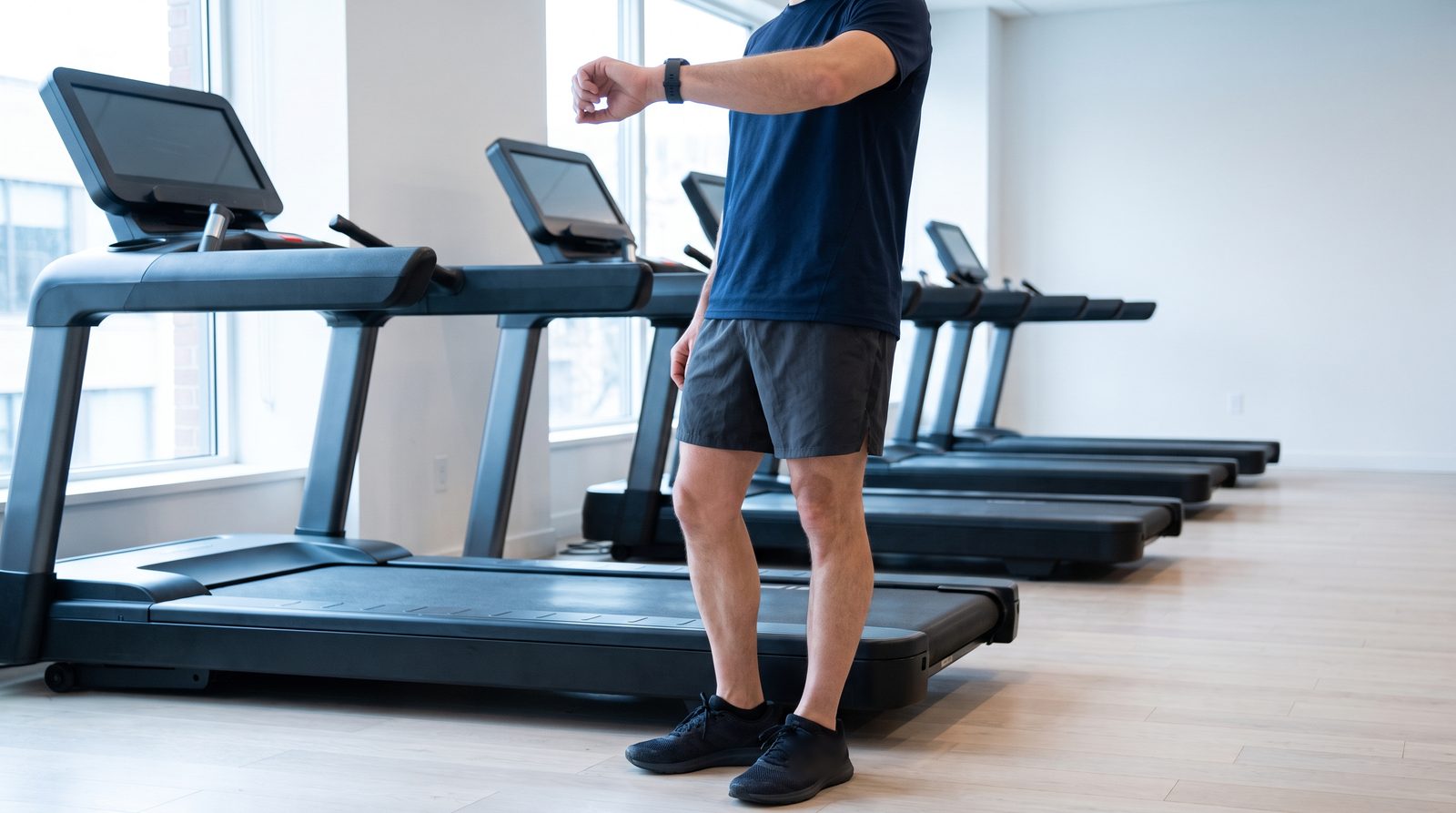
Strava is a logbook, not a tape measure
A wedding guest book records whatever name each guest writes. Nobody at the door checks the spelling or asks for ID, so the book is a faithful record of what people wrote, not of who was there.
Strava treats your run the same way. It takes the distance already written in the file your device uploads. Strava itself never sees the treadmill. It only sees what your watch, phone or connected app handed it, and it writes that number down as if it were a measurement.
Where your Strava treadmill distance comes from
Indoors, there are three usual sources, and each one fails in its own way.
Three ways a treadmill run reaches Strava
Which device wrote the distance, and what it cannot see.
| Source | Where the distance came from | What it misses |
|---|---|---|
| Watch indoor run | An estimate from your arm swing and steps | It changes with your stride and form, and it never sees the belt |
| GPS left on | Satellite positions under a roof | The track wanders while you stay in one place, so it can add distance you never ran |
| Display copied in | The treadmill's own number, typed in or synced | It agrees with the display, including any error the display carries |
Strava's own phone app does not record indoor runs, and its Apple Watch app measures indoor distance with the watch's step sensor.
That is why the number jumps around from week to week. A tired day shortens your stride and the wrist estimate shifts with it. A run with GPS on picks up a wandering track.
Two things you can do before your next run. Turn GPS off when you record indoors, which is Strava's own advice. Skip the Correct Distance tool on a treadmill run, because it rebuilds distance from GPS points, and a run on a belt has none worth keeping.
When Strava agrees with the treadmill
A match feels like proof. Usually it means one number was copied from the other. Some watches ask for the treadmill's distance when you save the run and adjust themselves to it. From then on, the watch and the display tend to agree on that machine, because one learned from the other.
On one of my own runs, the treadmill and my Apple Watch both said 5.6 miles. The belt had carried me 5.0. That was one machine on one day, and the watch simply echoed the treadmill. Anything that took its distance from either of them would have logged 5.6. The Apple Watch guide covers that pairing in full.
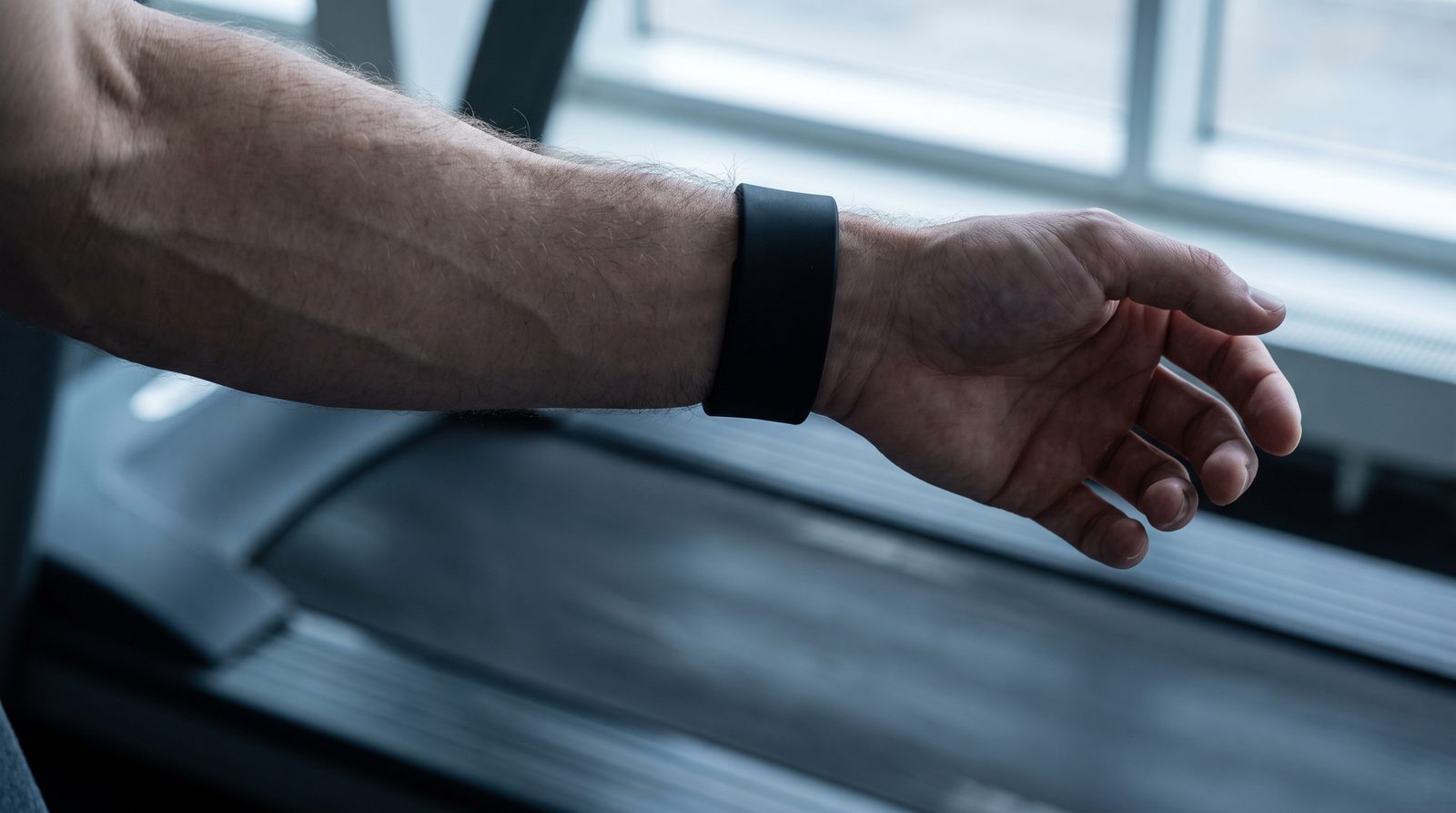
Even a small gap adds up in a training log. Say your machine reads 5 percent long and your Strava miles follow its display. A 30 mile week in your feed is then about 28.6 miles of belt, and every weekly total, streak and yearly goal on the app is built on that number.
Typing the display's distance into your log instead does not fix it. It swaps one unchecked number for another. The display is the machine's own number, and nothing on it lets you check that figure against the ground the belt covered.
Give Strava a number you checked
The only way to know which figure is closer is to measure the belt itself. Treadwell does that with an iPhone Pro's camera and LiDAR sensor. It reads the moving surface, never the display, your wrist, or the file Strava received. Measure your usual machine at the speed you run, or at each speed you use, and you can work out how far its display's miles sit from the belt's. When Strava and the treadmill disagree after that, you know which one is off, and by how much.
Check the belt behind your Strava miles
Measure what your treadmill's belt really does at the speed you log. You need an iPhone Pro with LiDAR.
Quick answers
Why is my Strava treadmill distance wrong? Your Strava treadmill distance is off because Strava does not measure your treadmill run. It logs the distance your watch or app sent it, and indoors that number is an estimate from your wrist, a GPS track that wanders under a roof, or a copy of the treadmill's display.
Where does Strava get treadmill run distance? Strava takes the distance recorded in the file your watch or app uploads. Its phone app does not record indoor runs, and its Apple Watch app measures indoor distance with the watch's step sensor.
Should I turn off GPS for a treadmill run? Yes. Strava's own help page says to disable GPS when you record indoors. Satellite positions wander under a roof, so a treadmill run recorded with GPS on can pick up distance you never ran.
Sources.
- How Strava gets distance: Strava Help Center, How Distance is Calculated, says Strava takes the distance data recorded in the uploaded file and parses it into a data stream, and that Correct Distance, on the website, recalculates distance from GPS coordinates.
- Indoor runs on Strava: Strava Help Center, Indoor, Treadmill, and Bike Trainer Activities, says the mobile app cannot record indoor runs, the Strava Apple Watch app records them using the watch's pedometer, and you should disable GPS on your device when recording indoors.
- Watches indoors: Apple Support article 105002 says earning Activity credit depends on natural arm motion, and that when you run indoors the watch also uses the accelerometer.
- Copying the display: Garmin's treadmill calibration asks for the distance the treadmill shows when you save an indoor run, and uses it to adjust the watch.
- The 5.6 versus 5.0 run is our own, on treadmill #6 on June 14, 2026, with the treadmill and an Apple Watch both reading 5.6 miles. It was checked against the standing tachometer table for that machine.