Guides · Treadmill speed for zone 2
Treadmill speed for zone 2: why no one number fits
On your treadmill at home, 5.8 is the setting that keeps your watch in zone 2. At the gym you type in the same 5.8. Your heart rate settles lower than it does at home, and you cannot tell if that is your fitness or the machine.
There is no single treadmill speed for zone 2. It is whatever pace keeps your heart rate in the easy range your watch or plan sets. The speed you find belongs to that belt, because two treadmills on the same setting can move at different speeds.
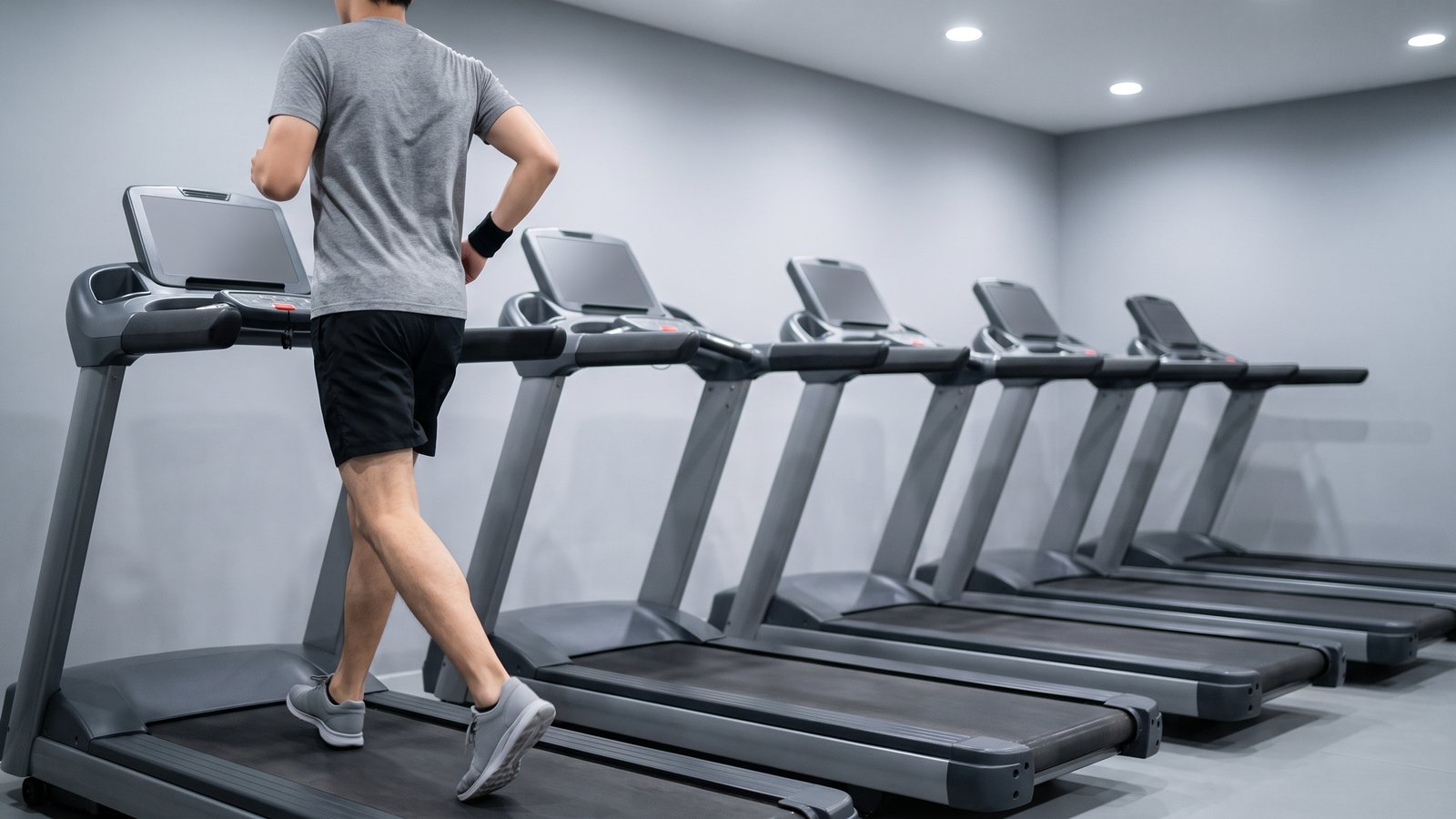
Find your zone 2 speed by heart rate first
Zone 2 is a heart rate range your watch or plan sets, so no speed chart can hand it to you. The speed that keeps you inside it depends on your fitness and on how you feel that day.
Start slower than you think you need. Give your heart rate a few minutes to settle, because it lags behind every change you make. Then raise the speed a tenth at a time until your watch holds steady inside your zone 2 range. Write that setting down.
Expect to ease off late in a long run. Heart rate tends to creep up the longer you hold one speed. The setting that kept you in zone 2 at minute ten may push you past it by minute fifty.
Incline is your other dial. A little grade lifts your heart rate at a slower speed, which helps when zone 2 on a flat belt feels like a shuffle. The incline number can be wrong as well, and how to tell if your treadmill's incline is accurate covers that question.
Why the speed you found does not travel
That 5.8 on the display is an instruction. It tells the motor what speed to aim for. The display does not measure the belt. A belt can land a little off that instruction, and the next belt can miss by a different amount. In a lab test of four treadmills, average belt speed came in between about 98 and 103 percent of the setting, and the machines showed differences from one another.
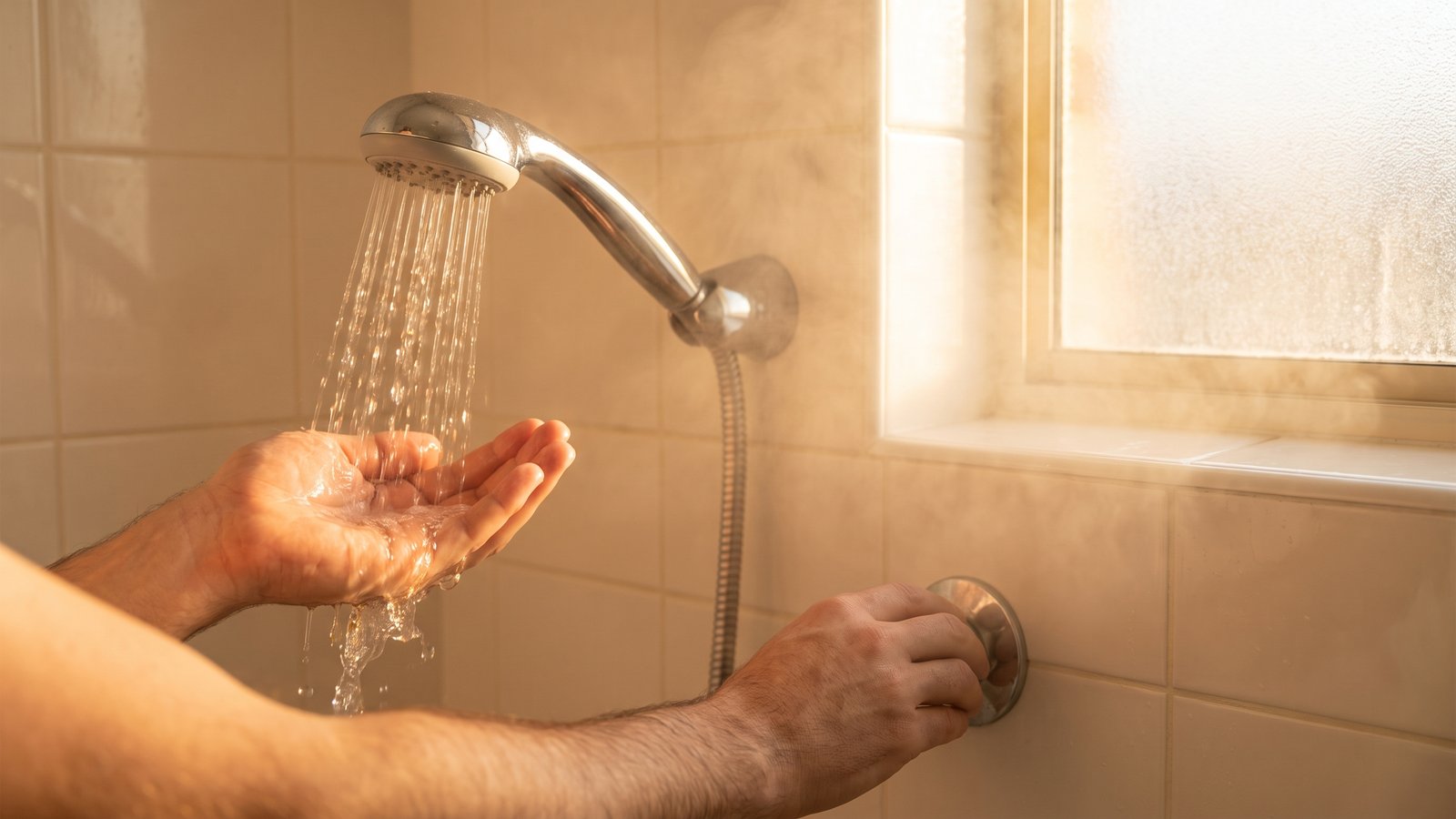
At home you know exactly where to turn the shower knob for the water you like. In a hotel shower, that same knob position can run hotter or colder, and only your hand under the water tells you. On the belt, your heart rate does the job your hand does under the water. The setting is only where you turned the knob, and the spot you learned belongs to your own shower.
A zone 2 pace from any chart or calculator runs into the same gap. The treadmill still has to deliver that pace, and its display cannot tell you whether it did.
The 26 seconds hiding inside one setting
Take a zone 2 setting of 5.8 mph. The display turns that into a 10:21 mile.
Three treadmills, one 5.8 setting
The display reads 10:21 on all three. These belts are made up to show the arithmetic.
| Belt | Real mph | Real pace per mile |
|---|---|---|
| Matches the display | 5.80 | 10:21 |
| 2 percent fast | 5.92 | 10:08 |
| 2 percent slow | 5.68 | 10:34 |
A 2 percent miss either way sits inside what the 2021 lab test measured.
Now put the fast belt in your home and the slow one at the gym. The same 5.8 is 26 seconds a mile slower at the gym, so your heart rate reads lower and it looks like you got fitter overnight. Swap the machines and the gym run looks like a bad day instead. If you track progress as the pace you hold at your easy heart rate, each belt's error moves that pace by its own amount. Any pace you carry out to the road carries that error with it.
Which number to carry from one treadmill to the next
Your heart rate is the number that travels. On a treadmill you have not used before, start from your zone 2 range and let the speed land where it lands. The setting you found at home is still a good note for that one machine. It says nothing about the next one.
Your watch agreeing with the display settles nothing. Indoors a watch can lean on your arm swing, and some watches offer to take the treadmill's own distance when you save the run, so the two numbers can share one source. Why your treadmill and your watch disagree walks through what each one is counting. If your heart rate also runs higher indoors than out at the same pace, the guide to a higher treadmill heart rate covers the room as well as the belt.
A zone 2 pace you can trust across machines, or take out onto the road, has to come from the belt itself. If a belt turns out to be well off, your manual or a technician owns any fix.
Put a real pace on your zone 2 setting
Treadwell reads how fast the belt is actually moving, with the LiDAR sensor and camera of an iPhone Pro. Step off, leave the belt running at your zone 2 setting, and point the phone at it from the floor. Do that on each treadmill you train on. The settings in your notes then become real paces you can line up side by side, and you will know if 5.8 at home matches the gym.
See what pace your zone 2 really is
Read the belt at your zone 2 setting and keep the pace, not the number on the display. Treadwell needs an iPhone Pro, because it reads the belt with the camera and LiDAR sensor.
 Scan with your iPhone Pro to get the app
Tested: in our tachometer tests the app read within about 2 percent of true belt speed.
Quick answers
What is the treadmill speed for zone 2? There is no single treadmill speed for zone 2. It is whatever pace keeps your heart rate in the easy range your watch or plan sets. The speed you find belongs to that belt, because two treadmills on the same setting can move at different speeds.
What pace is zone 2 running? Zone 2 pace is whatever pace holds your heart rate in your zone 2 range that day, so it changes from one runner to the next. Outside, a GPS watch gives you a pace you can compare from run to run. On a treadmill, the pace also depends on how true that belt is.
Should I use incline or speed for zone 2 on a treadmill? Either one raises your heart rate, so use the one that lets you stay in range comfortably. If more speed would push you from a walk into a jog, a steeper grade can do the same job. The incline reading can be off too, just like the speed.
Sources.
- Machines that disagree: Willwacher S and co-authors, Scientific Reports 11:2244, 2021. On four laboratory treadmills used for walking and running, belt speed averaged over each stride stayed in a band from about 98 to 103 percent of target. The authors report clear differences between the treadmills, largest on the low-cost one during running.
- Pace on the wrist: per Apple Support article 105002, an Apple Watch on an indoor run leans on arm motion and its accelerometer. Garmin's Forerunner owner's manuals include a step called "Calibrating the Treadmill Distance," where you enter the distance the treadmill shows.
- The 5.8 setting, the three belts and the shower are examples I built for this page. I did the pace arithmetic myself.