Guides · Beep test on a treadmill
Beep test on a treadmill: the speeds, and whether the belt gives you them
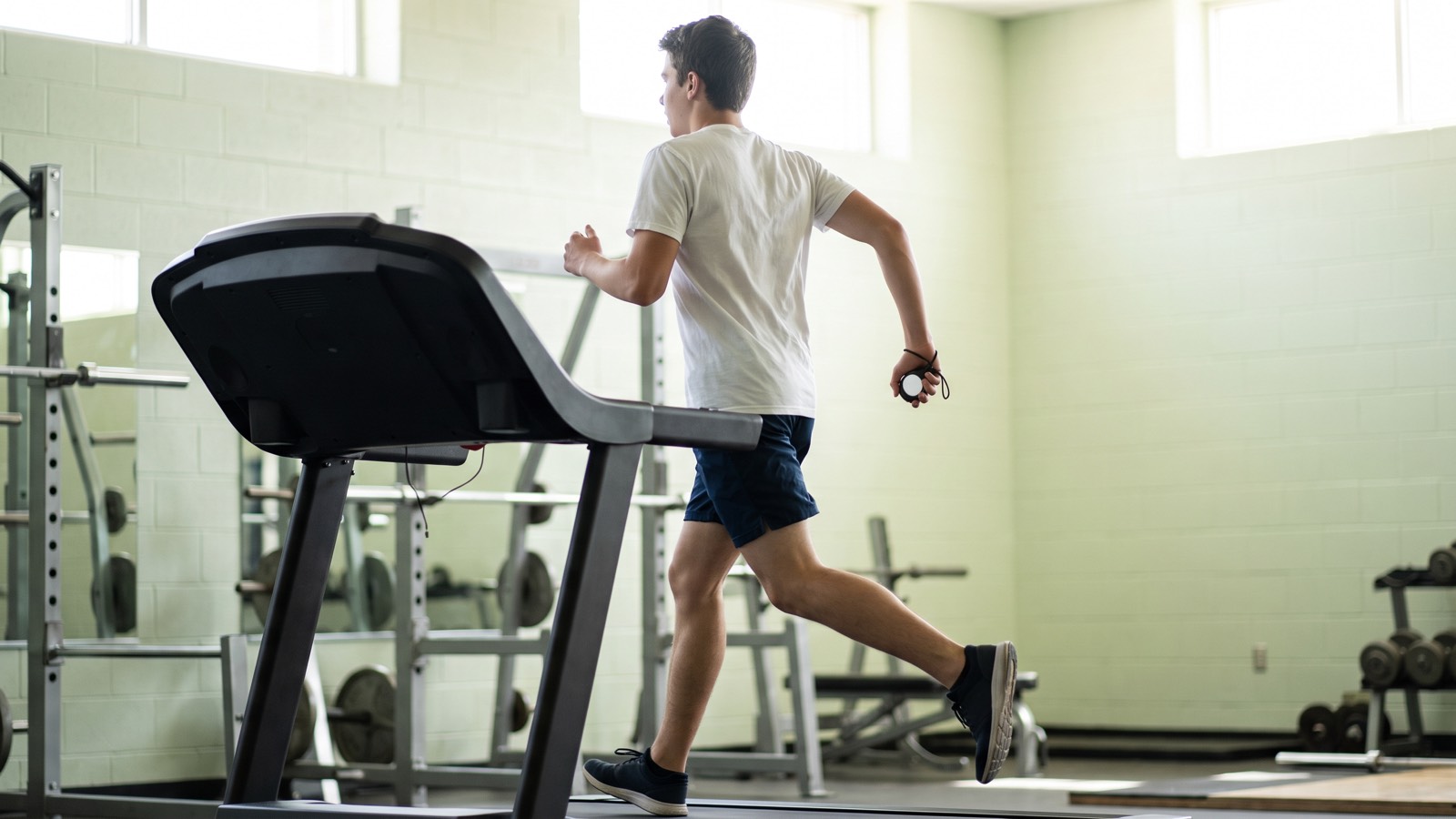
Your beep test is three weeks out, and you need level 8. You practice on a treadmill, raising the speed every minute, and you hold 12.0 km/h (7.5 on a mph keypad) through the full minute of level 8. In this guide, a level means a stage of the common one-minute version from 1988. Other versions can number and pace their levels differently. Each level is only a few percent faster than the one below it. The speed you held came from the keypad. Nobody checked the belt.
Yes. You set each level's speed yourself. The common one-minute version starts at 8.5 km/h (5.28 mph, an 11:22 mile) and adds 0.5 km/h a minute. Each level is roughly 4 to 6 percent faster than the one before, so a belt a few percent off can leave you half a level or more off pace.
The speeds, level by level
Beep test stages 1 to 11 as treadmill speeds
These speeds use the one-minute version from 1988, where each stage is 8 km/h plus 0.5 km/h per stage number.
| Stage | km/h | mph | Press (mph) | Pace per mile |
|---|---|---|---|---|
| 1 | 8.5 | 5.28 | 5.3 | 11:22 |
| 2 | 9.0 | 5.59 | 5.6 | 10:44 |
| 3 | 9.5 | 5.90 | 5.9 | 10:10 |
| 4 | 10.0 | 6.21 | 6.2 | 9:39 |
| 5 | 10.5 | 6.52 | 6.5 | 9:12 |
| 6 | 11.0 | 6.84 | 6.8 | 8:47 |
| 7 | 11.5 | 7.15 | 7.1 | 8:24 |
| 8 | 12.0 | 7.46 | 7.5 | 8:03 |
| 9 | 12.5 | 7.77 | 7.8 | 7:43 |
| 10 | 13.0 | 8.08 | 8.1 | 7:26 |
| 11 | 13.5 | 8.39 | 8.4 | 7:09 |
The test keeps climbing after stage 11. Each pace uses the exact mph.
The original test from 1982 started at 8 km/h and raised the speed every two minutes, and other versions can use different speeds, so match your table to the version your test uses. A keypad that moves in tenths cannot hit every stage exactly. The press column rounds to the nearest tenth, which leaves you a few tenths of a percent off at most.
Why the belt version is a different test
The beep test is a shuttle: 20 meters, brake, turn, go again, with each beep setting when you reach the next line. The formulas that turn a level into a fitness score were built from people running that shuttle, turns included. On a belt you run straight at one steady speed, with no braking and no turning. That makes a treadmill level practice for the pace. It does not give you a beep test score.
Why a few percent is most of a level
Your display shows the speed you typed in. It never measured the belt. A 2021 lab test of four treadmills, one badly worn, found belts averaging about 98 to 103 percent of their setting with walkers and runners on board.
Now look at the ladder. Every level adds 0.5 km/h. At stage 1 that step is 5.9 percent of your speed. By stage 8 the step is 4.2 percent, and by stage 11 it is 3.7 percent. A belt's error can be most of a level's step. So the error can move the speed you practice by part of a level, or most of one.
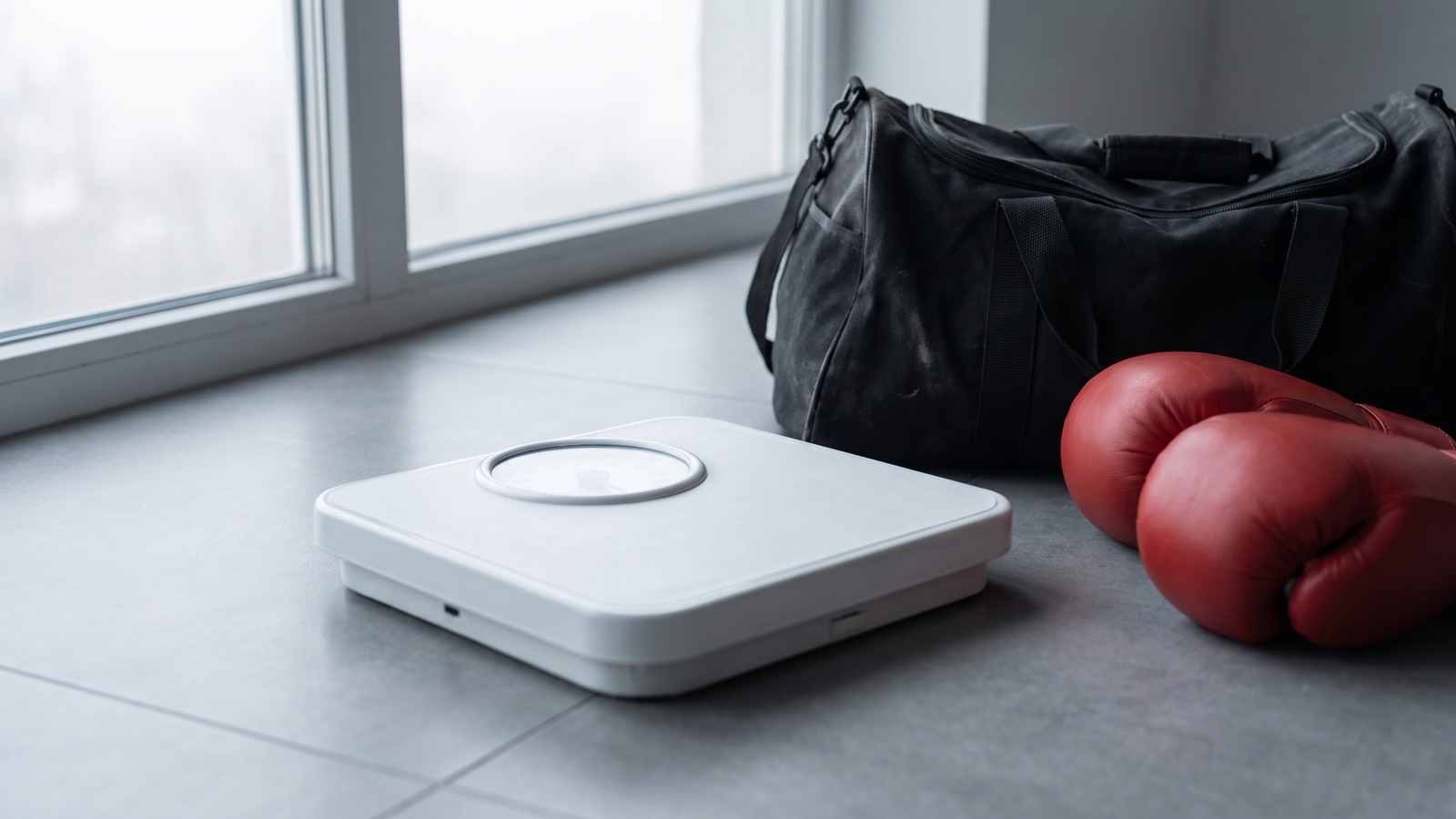
Picture weight classes and a bathroom scale that reads light. Say the classes sit four pounds apart and your scale at home reads three pounds under. You think you made the lower class, and you learn the truth at the official weigh-in. The treadmill is your home scale, and the hall is the weigh-in.
Stage 8 on three belts
Take stage 8 on three made-up belts.
The same stage 8 setting on three belts
Each row works from a base of 12.0 km/h.
| Belt | Real km/h | Real mph | Pace per mile | Matches |
|---|---|---|---|---|
| Runs as set | 12.0 | 7.46 | 8:03 | Stage 8 |
| 2 percent slow | 11.76 | 7.31 | 8:13 | About halfway between stage 7 and stage 8 |
| 3 percent fast | 12.36 | 7.68 | 7:49 | Most of the way to stage 9 |
On an mph keypad you would press 7.5 for stage 8, a 0.6 percent rounding that this example leaves out.
On the slow belt you practiced about half a level below the speed you meant. On the fast belt you practiced most of a level above it, so every minute was harder than your plan said.
What practice on a belt can tell you
Comparing this week with last week on one machine is still fair, because the same belt keeps repeating its own error. The guide on pacing intervals on a treadmill shows how that plays out. Switch machines between sessions and the comparison breaks, since the new belt brings an error of its own. For a quick first look at your machine, check your treadmill against a run you know. The Cooper test on a treadmill is the other field test runners often take to a belt. If your belt reads off, the owner's manual is the next stop.
Read the belt at your target stage
Before you trust a treadmill level, check the belt at the setting your target stage needs, such as 7.5 mph for stage 8. Start the belt empty and take a reading with Treadwell from the floor next to the deck. Treadwell only runs on an iPhone Pro, since the reading uses the phone's camera together with its LiDAR. The reading shows which stage speed the belt is really giving you, so you can practice at the stage you meant.
Know which stage your belt is really running
Take a reading of the empty belt at 7.5 before your next stage 8 practice. Treadwell runs on an iPhone Pro.
 Scan with your iPhone Pro to get the app
Quick answers
Can you do the beep test on a treadmill? Yes. You set each level's speed yourself. The common one-minute version starts at 8.5 km/h (5.28 mph, an 11:22 mile) and adds 0.5 km/h a minute. Each level is roughly 4 to 6 percent faster than the one before, so a belt a few percent off can leave you half a level or more off pace.
What speed is each beep test level on a treadmill in mph? In the one-minute version from 1988, stage 1 is 5.28 mph and stage 8 is 7.46 mph. The table above lists stages 1 to 11 with the setting to press. The 1982 original used different speeds, and some tests number or time their levels differently, so check which version your test follows before you copy a table.
Is a treadmill beep test the same as the real one? No. The real test is a 20 meter shuttle with a turn at each end, and the formulas that score it came from people running that shuttle. A level on a belt has no turns in it, so it is not an equivalent score. Treat it as practice for the pace.
Can you train for a bleep test on a treadmill? Yes. It trains your fitness and teaches you the pace of each stage. Read the belt at your target stage's setting first, so the pace you learn is the pace the beeps will ask for. Practice your turns in a hall or gym, because a belt has none to give you.
Sources.
- The one-minute version: Léger LA, Mercier D, Gadoury C, Lambert J. "The multistage 20 metre shuttle run test for aerobic fitness." Journal of Sports Sciences, 1988;6(2):93-101. The abstract gives the 8.5 km/h start, the 0.5 km/h rise each minute and the stage speed as 8 km/h plus 0.5 km/h for each stage number. It also says the scoring equation was built from people running the shuttle.
- The original two-minute version: Léger LA, Lambert J. "A maximal multistage 20-m shuttle run test to predict VO2 max." European Journal of Applied Physiology, 1982;49(1):1-12. It started at 8 km/h and rose 0.5 km/h every two minutes.
- Adults and the one-minute version: Léger L, Gadoury C. "Validity of the 20 m shuttle run test with 1 min stages to predict VO2max in adults." Canadian Journal of Sport Science, 1989;14(1):21-6. Shuttle speed was checked against a separate lab treadmill fitness test, not a treadmill version of the beep test.
- Belt speed against its setting: Willwacher S and co-authors, 2021, Scientific Reports 11:2244. With seven volunteers on four lab treadmills, one worn, average belt speed fell in a band from roughly 98 percent to 103 percent of the requested speed.
- My own notes: the three belts, the stage 8 practice plan and the weight class picture are an illustration, not machines I measured. The table speeds and paces are my arithmetic from the 1988 formula.