Guides · Foot pod treadmill accuracy
Do foot pods give a more accurate treadmill pace than your watch?
You clipped a pod to your shoe because the pace on your wrist indoors was clearly a guess. It reads steadier now, and you still have no way to check whether it is right.
A foot pod is usually more accurate than your watch for treadmill pace, because it reads your foot instead of your arm swing. It still measures you rather than the belt, so it cannot tell you whether the treadmill is running at the speed it claims.
A pod watches your foot, not the machine
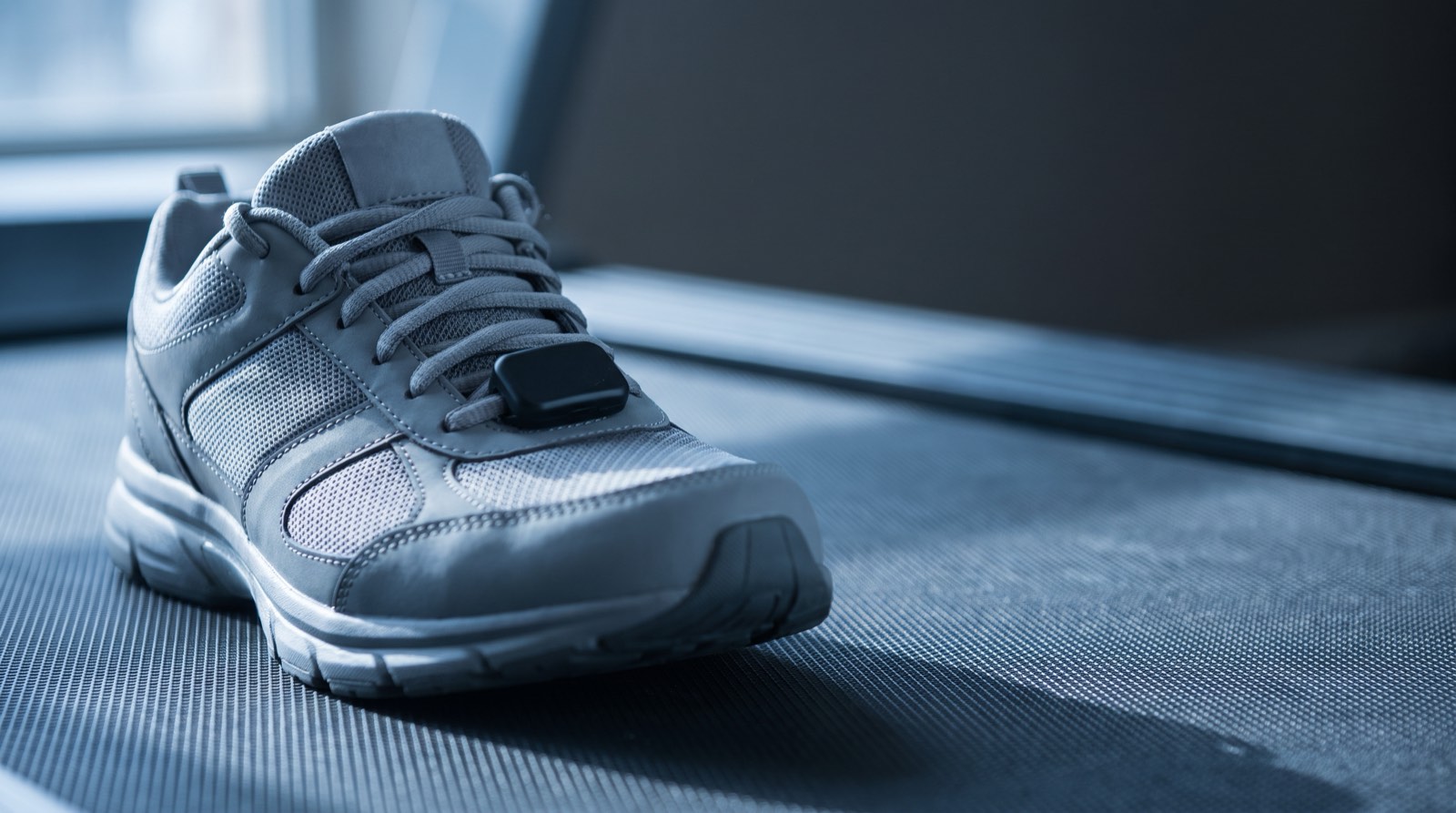
You know the shape of it already. The sensor on your shoe tracks how your foot moves, and turns that into a speed. That beats a wrist, because your arm swing is a loose stand-in for your legs and your foot is the thing actually covering ground.
Now notice what never happened. Nothing in that chain touched the belt. The pod is still building a number out of your body. It guesses how long each stride is, counts your steps, and multiplies.
A tailor can guess your height from your sleeve, or from your inseam. The inseam is the better guess. Neither one is a tape measure held flat against the wall.
What you calibrate against is the whole game
Both devices have a calibration, and the reference each one is pointed at decides everything after that.
Calibration is simple. The device covers a known distance, compares its own guess against the number you give it, and stretches or shrinks every future guess by that ratio. Whatever is wrong with the number you hand it is now wrong with every run you do. It works like setting your kitchen clock from a clock that runs five minutes fast. Yours runs five minutes fast too, and it looks right every time you check it against the one you copied.
Your watch's treadmill calibration works like that. You have probably met it without thinking, because some watches offer to save one the moment you finish an indoor run. You run a mile and a half or so, read the distance off the treadmill's display, and type that number into the watch. The watch adjusts itself until it agrees with the machine.
If the machine is honest, this works fine. If the machine reads five percent long, you have just taught your watch that five percent long is correct, and it will repeat that error on every treadmill run afterwards.
Pod makers send you outdoors instead, if they ask you to calibrate at all. You calibrate on a measured track, or on a route you already trust, against a distance somebody checked with a wheel rather than against the machine you are trying to test. A reference like that cannot be wrong in a way that follows you back indoors.
Tune your pod to match the treadmill anyway and you get the watch's problem back. The pod carries the machine's error from then on, indoors and out, until you reset it. One maker warns about this in exactly those terms.
So the pod is not better only because it sits on your foot. It is better because it was tuned against something that was never the machine you are trying to check.
If you have been saving that treadmill calibration for a year, it is not permanent. A watch's treadmill calibration can be reset, and a pod's calibration factor goes back to its default, both from the device's own settings. Reset the pod's factor before your next outdoor run rather than after, because a pod factor tuned to an indoor belt travels outside with you. The watch's treadmill calibration only applies indoors.
Three calibration references, and what each one risks
Only one of them can copy your treadmill's error into the pace you train by.
| The reference | Who uses it | Can it inherit the treadmill's error? |
|---|---|---|
| A measured track | Foot pod | No |
| A known outdoor distance, or a satellite fix | Foot pod | No |
| The treadmill's own displayed distance | Running watch, treadmill calibration | Yes, completely |
The two outdoor references are pod makers' own published protocols.
The number none of them read
Every number you are holding is an estimate. The pod estimates from your foot. Your watch estimates from your wrist. The treadmill shows the speed you set. Whatever checking it does happens at a part turning underneath rather than at the belt itself, and some machines carry no working speed sensor at all. On a worn or loose belt, the belt and the roller driving it can come apart under your foot. Not one of them reads the belt.
That costs you nothing right up until the belt is wrong. Then your pod and the display disagree, and you are holding two estimates with no referee. The track only proved your pod right on that track, on that day. No study we could find has tested a commercial pod's pace on a moving belt, so you have no independent check on it indoors, and you cannot tell which of the two is off. The one careful lab study of foot sensors on a treadmill measured the machine's true speed first and only trusted it after, which is the step almost everyone skips.
If you trust the display and your machine runs five percent slow, your tempo at what you believed was 7:30 pace was really 7:54, and you ran the whole block a notch easier than you meant to.
The belt can be read. It just needs something pointed at the belt, which is what we build. This is a check on our app, not on that treadmill. On a hotel treadmill the app had never seen, a handheld tachometer measured the true belt speed at two of its settings, and all three of our readings across those settings landed within 0.4 percent of it.
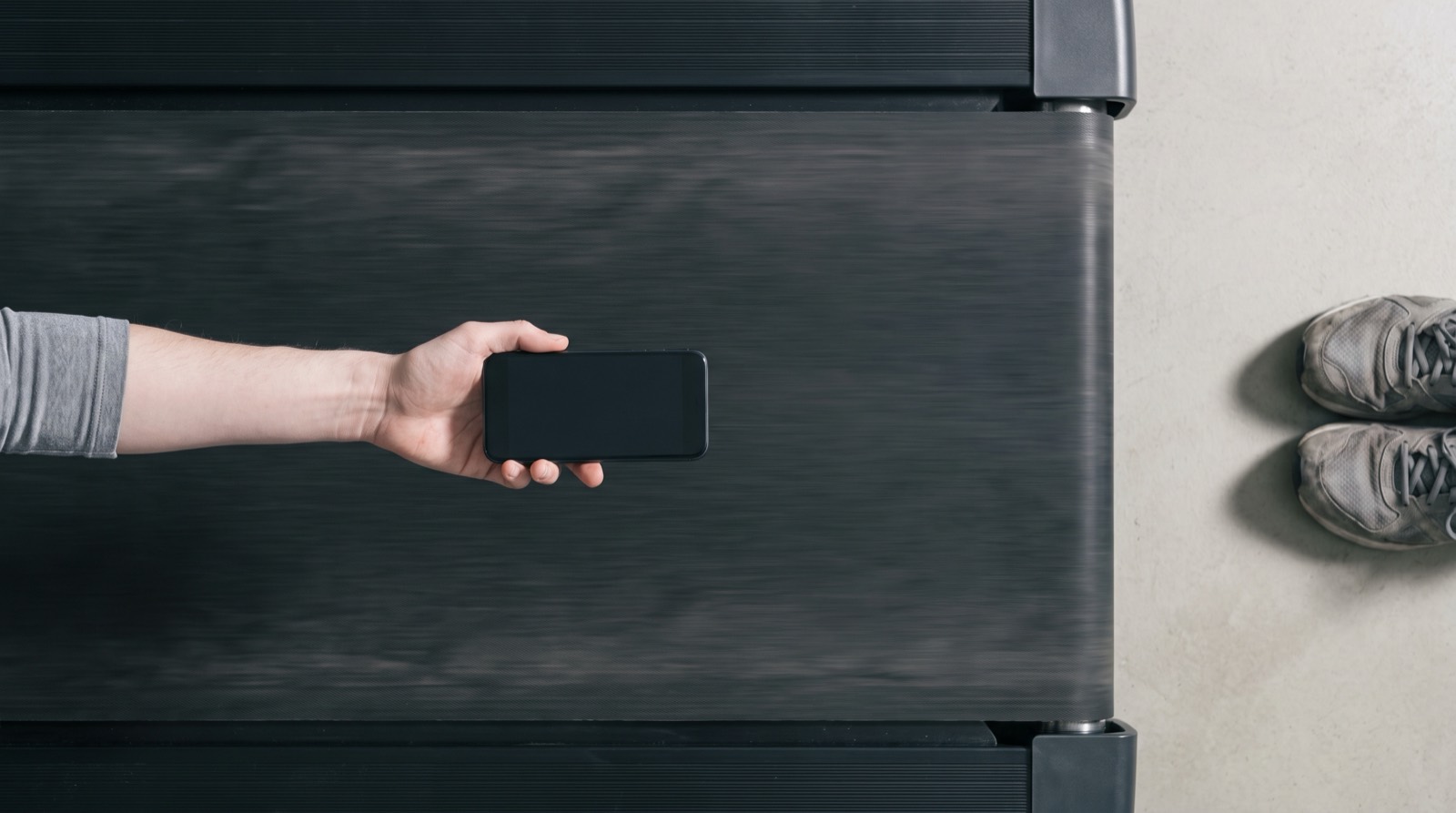
Treadwell measures the belt. You hold an iPhone Pro above the moving surface for a few seconds, its camera and depth sensor read that surface directly, and it hands back the pace and distance you actually ran. Your stride never enters the calculation, so there is nothing to calibrate against your treadmill and nothing to inherit from it. When the read is not clean, the app says so instead of inventing a number.
Your pod is still the better of the two things on your body. Your watch and your treadmill will keep disagreeing indoors, and now you know why neither one can settle it.
Check the belt your pod is standing on
The belt's real speed in a few seconds, measured directly. Treadwell needs an iPhone Pro.
Quick answers
Do foot pods give a more accurate treadmill pace than your watch? Usually yes. A pod on your shoe senses the motion of your foot, which is closer to the work you are doing than the arm swing your watch reads indoors. It is still an estimate of your stride rather than a measurement of the belt, so it cannot tell you whether the treadmill itself is running at the speed it claims.
Does a foot pod measure the treadmill belt? No. The pod turns your foot's movement into a stride length and a step rate and multiplies them into a speed. Nothing in that chain touches the belt. If the belt is off, your pod and the display disagree, and the pod cannot tell you which of the two is wrong.
Should I calibrate my foot pod using my treadmill's distance? No. Calibration copies whatever your reference gets wrong into every future run. Match your pod to the treadmill and it carries that machine's error, indoors and out, until you reset it. Pod makers point you at a measured outdoor distance instead, when they ask for a calibration at all. Typing the treadmill's displayed distance into a running watch is a different setting and carries exactly the same risk.
Is there a study proving foot pods are accurate on a treadmill? Not one we could find. Published work has measured how well foot-worn sensors count steps, size each step and estimate running power, but no reachable study checks a named commercial pod's pace or distance on a treadmill against an independent reference. One study that compared wearables carefully verified its treadmill first, confirming the displayed speed sat within 0.04 percent of the real speed before trusting it.
Sources.
- That a pod senses the runner rather than the machine is the makers' own description. Stryd says it uses gyroscopes and accelerometers to sense the motion of a runner and to capture the motion of a runner's foot through three dimensional space. Polar describes stride-motion sensing the same way for its stride sensor.
- The treadmill-display calibration is Garmin's "Calibrating the Treadmill Distance" instruction, which appears across its device manuals under indoor activities. It tunes the watch's own built-in distance estimate rather than a foot pod. Garmin documents a separate procedure for a foot pod, and that one adjusts a numeric calibration factor instead of asking for the treadmill's number.
- The maker that warns against matching a pod to the treadmill is Stryd, in its treadmill help pages: adjusting the calibration factor to match the treadmill display "will nearly certainly make your Stryd pod less accurate on the treadmill", and the factor must be changed back before running outside or outdoor pace comes back inflated.
- The outdoor calibration references are the pod makers' own protocols. Stryd's names the inside line of lane two, a distance wheel and a steel ruler, and eight laps for 3248 metres. Polar's stride sensor calibrates against a known run of more than 400 metres, with a separate automatic option over a longer distance that requires a satellite fix. Those are two makers' two separate protocols.
- The 0.04 percent treadmill verification and the high-speed video comparison come from Garcia-Pinillos et al., a study of agreement between two wearable devices and high-speed video analysis in 49 runners (PMC6759187). That paper reports step length and step frequency and never computes a pace or speed error, so no accuracy percentage for any pod is taken from it here.
- Six papers were fetched and read looking for a peer-reviewed test of a named commercial pod's treadmill pace or distance against an independent reference. None of them does it. Published work on foot-worn sensors measures step counts, step length and running power instead.
- That a treadmill counts a roller rather than the belt is what the manuals we hold describe: every speed sensor they document sits on a roller or a motor shaft, and none of them describes anything watching the belt's top surface. That a striding belt can slip during footfall under load is a documented symptom in manufacturer service documentation.
- The hotel treadmill figures are ours, taken on a machine the app had never been calibrated for. The 3.932 and 5.881 miles per hour are what a handheld tachometer measured the belt doing that day at two of the machine's settings, and every one of our three readings across those two settings sat within 0.4 percent of that tachometer. It is the accuracy of our reading and says nothing about whether that machine's own display was right.
- The five percent machine, the 7:30 tempo and the 7:54 it really was are an illustrative example. That is arithmetic, not a machine we measured.