Guides · Couch to 5K on a treadmill
Couch to 5K on a treadmill: is your first 5K really 5K?
The last run of the plan is 30 minutes without stopping, and you do it on the belt. The app says you did it, and the display shows a distance. Then you sign up for your first outdoor 5K and wonder whether those 30 minutes were a 5K at all.
You can do couch to 5K on a treadmill, but the plan counts minutes, not miles. Where 5K falls depends on your pace and on how fast the belt really moves, and the display gives you no way to check the belt. Measure the belt to know.
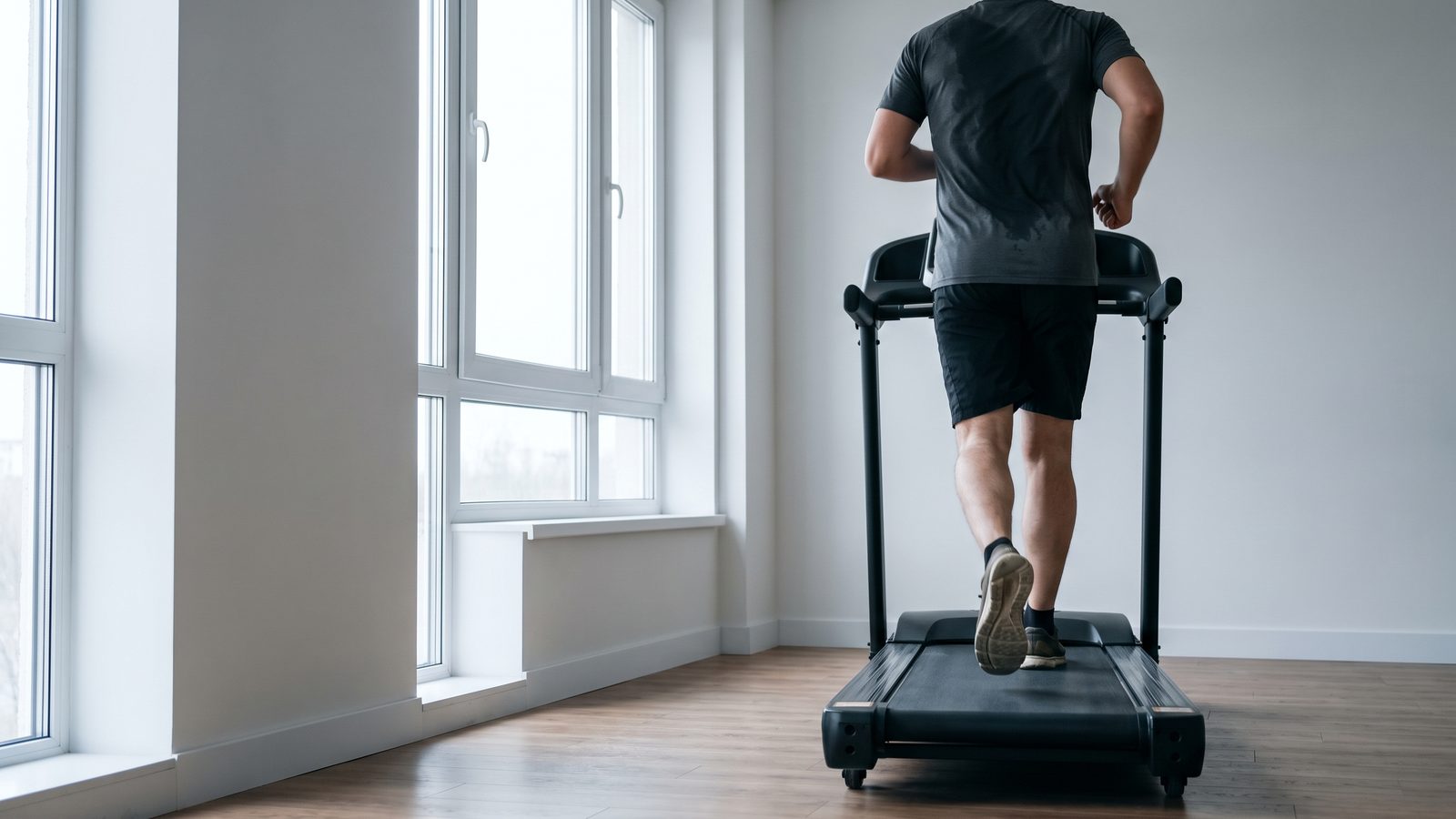
The plan is timed in minutes
Couch to 5K is built on the clock. The plan ends with 30 minutes of running without stopping. A 5K is 3.1 miles, so whether 30 minutes gets you there depends on your pace. At a 12:00 mile, 30 minutes carries you 2.5 miles, and a true 5K takes 37:17. At a 10:00 mile, you would need just over 31 minutes. Finishing the plan is a real milestone, and it is a milestone of time.
Where 5K fell was the treadmill’s call
On a treadmill, you find out where 5K is from the display. Nothing on the display lets you check its count against the belt under your feet.
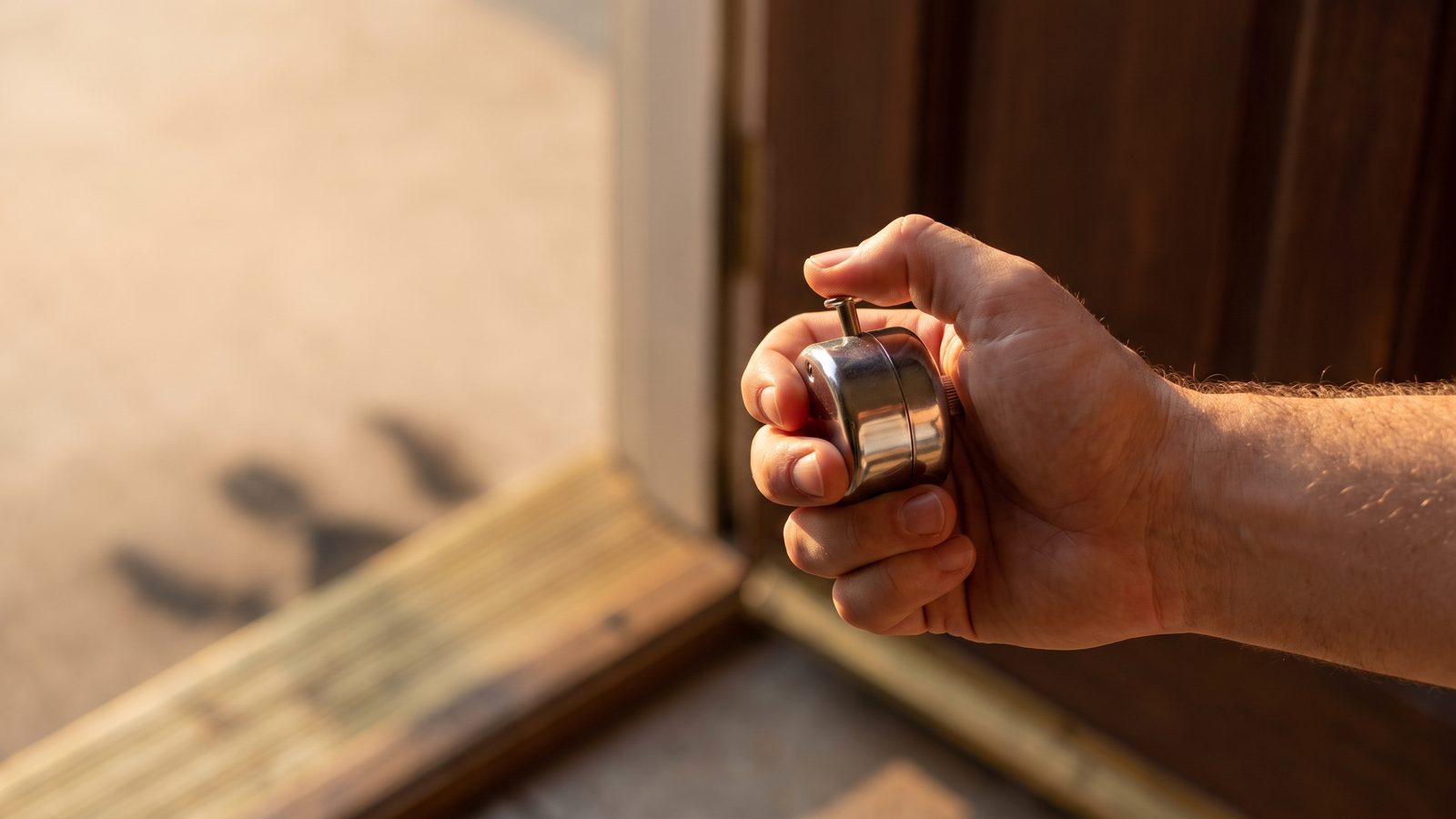
Picture the hand clicker that door staff use to count people into a venue. The sign by the door says 212 inside because the clicker says 212. Nobody walked the room to count heads. A wrong count would look exactly as sure as a right one. Your 3.1 is the number on the clicker. The belt is the room, and the display gives you no way to walk it. A certified road 5K was measured on the ground before race day, as the guide on how road race distances are measured shows.
Your 30 minutes on a belt that is 2 percent off
Say you set 5.0 mph, which the display calls a 12:00 mile, and run the plan’s final 30 minutes. How far you really went is the belt’s true speed times those 30 minutes.
Thirty minutes at a 5.0 mph setting, on three possible belts
All three belts are set to a 12:00 mile, and all three are made up.
| Belt | True mph | True pace | Ground in 30 min | A true 5K takes |
|---|---|---|---|---|
| Exactly right | 5.00 | 12:00 | 2.50 miles | 37:17 |
| 2 percent slow | 4.90 | 12:15 | 2.45 miles | 38:03 |
| 2 percent fast | 5.10 | 11:46 | 2.55 miles | 36:33 |
Paces are per mile. Both off belts sit inside the 98 to 103 percent spread of average belt speed that a lab study measured on four treadmills, including one documented as worn, while people walked and ran.
On the 2 percent slow belt, a true 5K takes you 46 seconds longer than on the right one. Your first outdoor 5K will run past the time your treadmill runs taught you to expect. On the 2 percent fast belt, a true 5K comes 44 seconds sooner, so you are a little stronger than your log says.
Did the distance on the display show that gap? On my own runs, I have seen the display show more distance than the belt really carried me.
Couch to 5K on a treadmill vs outside
Couch to 5K on a treadmill and a first run outside feel different. Outside, you meet wind, uneven ground and turns that a treadmill in a room does not give you. The guide on why the same effort feels different on the road covers that side. For race day itself, see whether treadmill fitness carries over to the road.
Your treadmill 5K was never checked against the belt. If your first outdoor 5K felt longer, you cannot rule out that some of it really was longer.
Your watch cannot settle it
Your watch never sees the belt. Indoors it reads your running from its own motion sensor. Some watches also ask you to type in the treadmill’s distance when you finish. A match between the two proves nothing on its own. The guide on how your watch comes up with a treadmill distance, and why a slow belt slips past it walks through it.
Know your 5K time before you run it outside
Measure the belt at the speed you ran the plan on, on the treadmill you ran it on. Your true 5K time follows from the belt’s true speed, and the display stops being the judge. At a measured 4.90, for example, a true 5K takes 38:03. You would plan to keep running about 8 minutes past the plan’s 30. If you switch speeds during a run, measure each speed you use.
If the belt measures off, fixing it is work for your manual or a technician.
Check the belt you trained on
Treadwell is an iPhone app that measures a treadmill belt’s true speed using the phone’s camera and LiDAR sensor, which is why it needs an iPhone Pro. Go back to the treadmill you did the plan on. Stand on the floor beside it and run the belt empty at the speed of your 30-minute runs. Point the phone at the moving belt. The reading gives you the speed your true 5K time depends on.
Find where your 5K really ends
See what your belt truly runs at the speed you trained on, and head to your first outdoor 5K knowing how many minutes a true 5K takes you. Treadwell works only on iPhone Pro models, because it needs their LiDAR sensor.
 Scan with your iPhone Pro to get the app
Tested: in our tachometer tests the app read within about 2 percent of true belt speed.
Quick answers
Can you do couch to 5K on a treadmill? You can do couch to 5K on a treadmill, but the plan counts minutes, not miles. Where 5K falls depends on your pace and on how fast the belt really moves, and the display gives you no way to check the belt. Measure the belt to know.
Is couch to 5K always 30 minutes? Couch to 5K ends with 30 minutes of running without stopping, so the plan is built on time. Whether those 30 minutes reach 5K depends on your pace and on how fast the belt really moves. At a true 12:00 mile, a 5K takes about 37 minutes.
Why does my first outdoor 5K feel longer than the treadmill? Outside, wind, uneven ground and turns change the effort in a way a treadmill in a room does not. Distance may play a part too, because the treadmill gives you no way to check its 5K against the belt, while a certified road 5K was measured before race day.
Sources.
- The plan’s final run: NHS Better Health, “Get running with Couch to 5K” (accessed September 26, 2026, with the same wording in the Internet Archive capture of September 4, 2026). It says that by the end you will be running for 30 minutes without stopping, that the program takes 9 weeks or longer, and that you can do the runs on a treadmill. The same page describes the plan as taking you to 5 km.
- A treadmill version in minutes: c25k.com, Couch to 5k Treadmill Version. Its schedule is written in minutes and ends on a 30 minute run, and the page describes the program as running 5 kilometers or 30 minutes in 9 weeks.
- The table and the 5K times: A 5K is 5 kilometers. Every pace, distance and time on this page is my own arithmetic on that distance.
- How a road course is measured: USATF-certified road courses are measured on the ground before the race. The virtual race guide linked above explains the method.
- The 98 to 103 percent range: Willwacher et al., Scientific Reports 11:2244, 2021. The study put seven people on four lab treadmills, walking and running, and one of those machines is documented as worn. Across them, average belt speed landed from roughly 98 to 103 percent of what was set.
- What a watch uses indoors: Apple Support article 105002 says the watch also uses its accelerometer when you run indoors. Garmin’s owner’s manuals for the Forerunner 165, 255, 265, 955, 965 and 970 carry a Calibrating the Treadmill Distance option that asks what distance the treadmill reported.
- My own runs: I have seen a treadmill display show more distance than the belt carried me. On treadmill #6, on June 13, 2026, it read 2.3 miles for a true 2.0, and on June 14, 2026, it read 5.6 for a true 5.0. I checked both against the belt speeds I had already tachometered on that treadmill. A third run read 5 miles for a true 4, and I did not record that machine or the date.
- Made-up examples: The 5.0 mph runner, the three belts, the measured 4.90 and the door clicker are illustrations. None of them is a machine I measured.