Guides · Polar treadmill calibration
Polar treadmill calibration: where your watch learns its indoor distance
You finish 50 minutes at 6.3 on the treadmill. The display shows 5.25 miles, your Polar shows 5.12, and you go hunting for the calibration step that makes them match. Before you change anything, ask which of the two needs fixing.
Polar treadmill calibration is mostly learned outdoors. Your watch averages its last 20 saved corrections, and a stride sensor calibrates to GPS or to a distance you know. When your Polar and the treadmill disagree, you are holding two separate estimates, and only the belt can settle it.
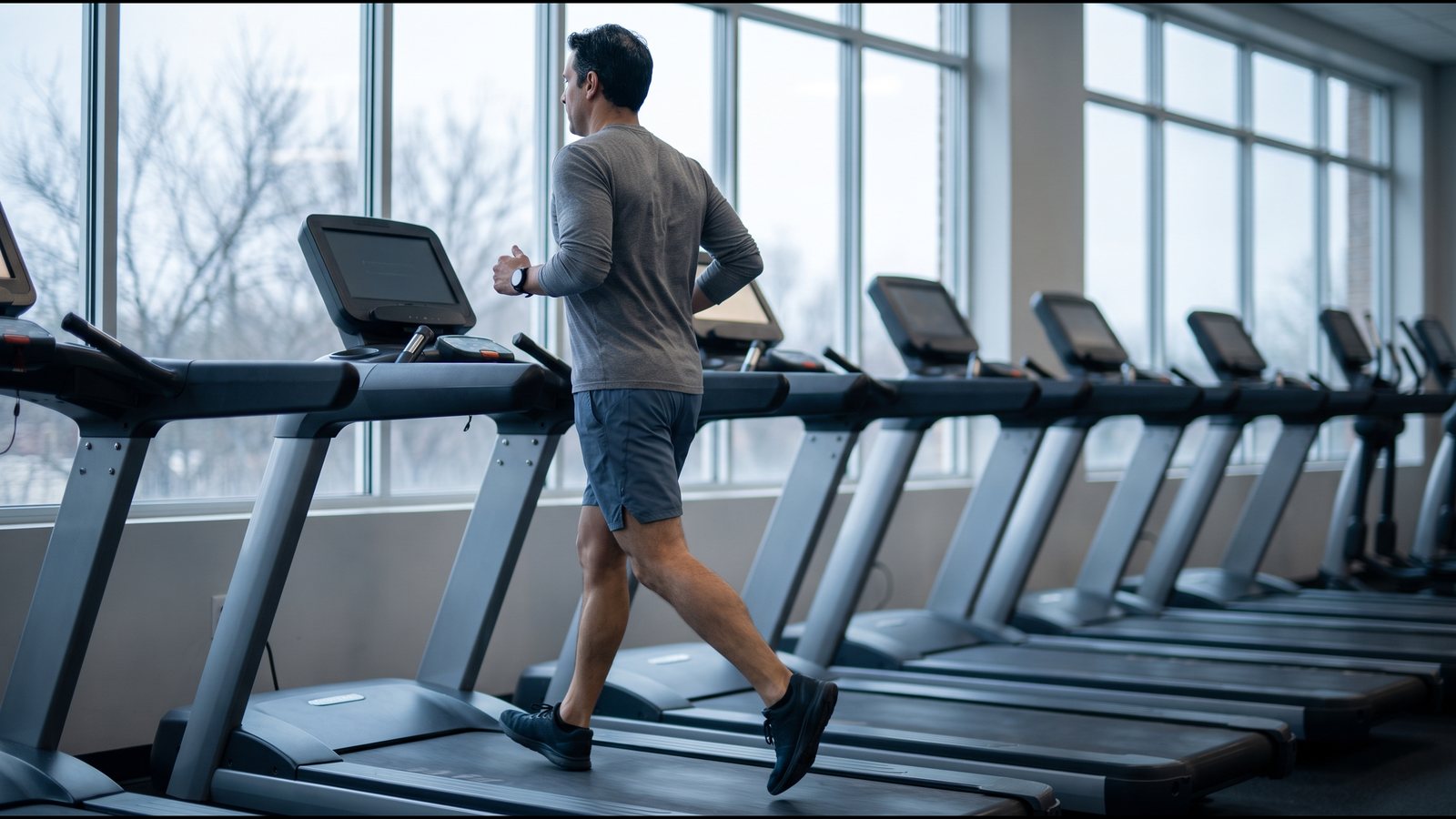
Your Polar was tuned outdoors
Your Polar does its learning on the road. On a steady outdoor run of at least 15 minutes, on fairly flat ground and faster than about 13:48 a mile, the watch compares the speed it reads from your wrist with the speed from GPS. The difference becomes a correction, and the watch saves it.
It keeps the last 20 of those corrections. On a treadmill run with no stride sensor paired, the watch has neither GPS nor a sensor to work from, so it uses their average. You cannot open them up and look at them.
Without a stride sensor, your Polar's treadmill distance is your wrist's estimate. The watch then adjusts that estimate by a running average of how your wrist matched GPS on recent outdoor runs. One new correction is a twentieth of that average. Your Polar reads your wrist best when your height and handedness are set and the watch sits in the same spot on your wrist. A pace that feels natural helps too.
Picture a guitar you tuned by ear against a recording. Next to that recording, it sounds right. The treadmill is a second instrument, set up somewhere else, and it plays the note you asked for. When the two clash, tuning one to the other does not fix anything. You need a tuning fork, and for a treadmill the tuning fork is the belt's measured speed.
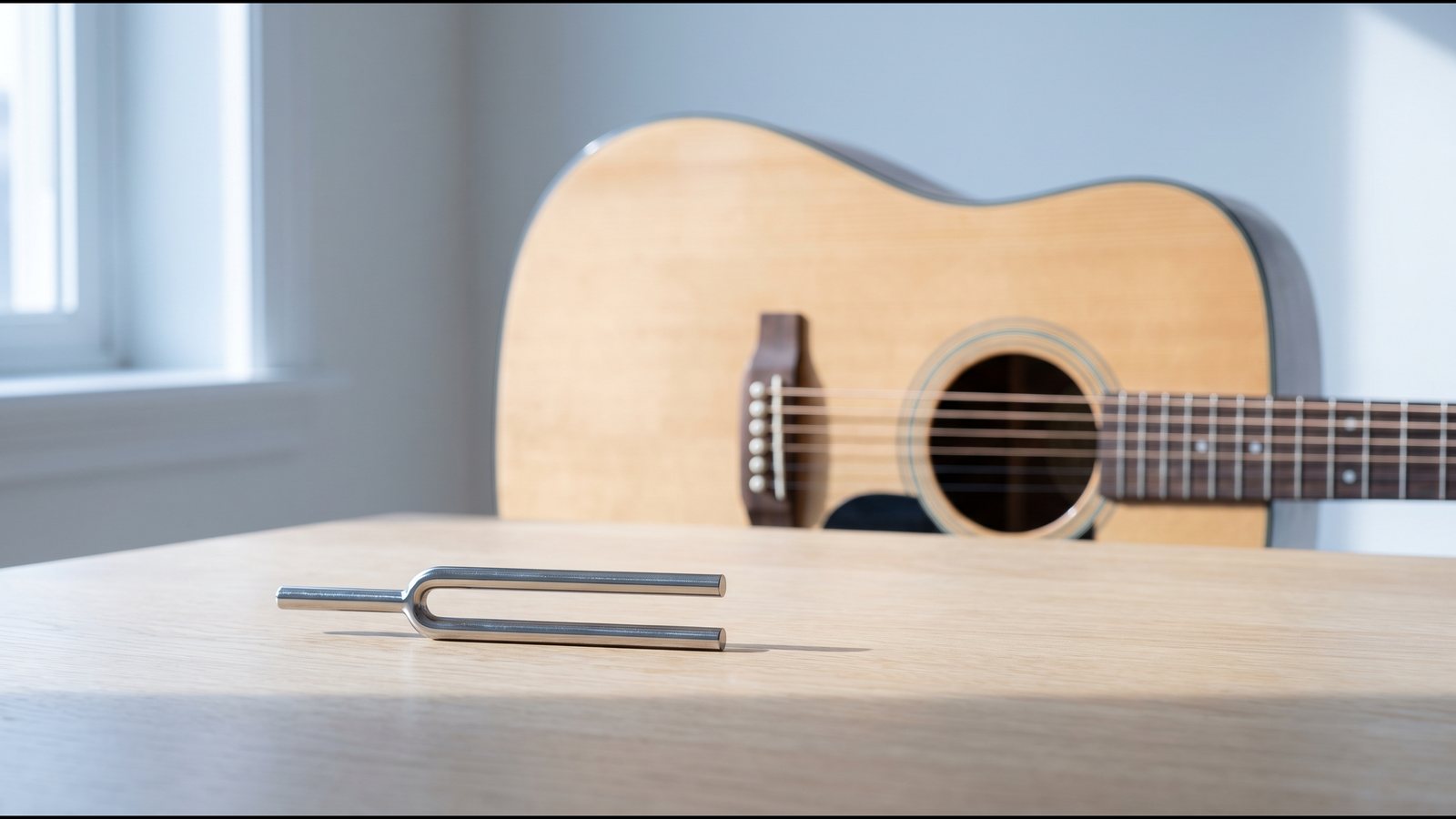
The treadmill was tuned somewhere else
The display on a treadmill shows the speed you set. Nothing in the machine watches the moving surface of the belt and reports what it really did. A 2021 lab test put four treadmills under walkers and runners. Their belts landed anywhere from 98 to 103 percent of what the dial asked for. A machine can be a few percent off, and its display shows the same number either way. Outside the lab it can be worse. One treadmill I use showed 5 miles for a run that was truly 4 miles long.
If you want a sense of how far your own machine could stray, start with checking whether your treadmill is accurate. Before you use the display's distance as a reference, read what your display's distance really tells you.
Two numbers, one run
You set 6.3 mph, a 9:31 mile, and run for 50 minutes. Now try the same run on two different belts.
One 50 minute run at a displayed 6.3 mph
This runner and both belts are invented, and so is the Polar figure. Each belt row falls within the lab range above.
| Source | Pace per mile | Miles |
|---|---|---|
| What the display showed | 9:31 | 5.25 |
| What your Polar showed | 9:46 | 5.12 |
| True, if the belt ran 2 percent slow | 9:43 | 5.15 |
| True, if the belt ran 2.5 percent fast | 9:17 | 5.38 |
On the slow belt, your Polar landed nearer the truth. On the fast belt, the display did. The gap between the two numbers is the same in both cases. The belt changed, and neither number noticed. Only the tuning fork says which way it points.
Now say your Polar ends up matching the display on the slow belt, which the next section shows can happen. A run like this would log 0.10 miles you never ran, and your pace would look 12 seconds a mile quicker than you ran it.
The one shortcut that copies the machine
Your Polar can also pair with a stride sensor, and the sensor has a manual calibration. You run a distance you know, more than 400 meters, and then enter it. On a treadmill, the distance you know is usually the one on the display. Enter it, and the sensor learns to repeat the machine, including its error. Later runs in that sport profile use that factor until a later calibration changes it.
For treadmill running, your Polar's method sends the sensor outside. You turn GPS on, do the calibration run outdoors, and then switch GPS off again in the treadmill profile. That choice keeps the sensor tied to GPS. For what a pod measures on a belt, see the foot pod guide.
Some other watches work from the treadmill's number instead. A Garmin asks you to enter the treadmill's distance and adjusts to it, and a COROS uses the distance you type to retune its pace for every cadence.
Check the belt you log most
Start with the treadmill you run on most, at the speed you log most. Treadwell uses your iPhone's camera and LiDAR to read how fast that belt is moving at your setting. That reading is your tuning fork. Multiply it by your time and you have a distance that both your Polar and the display can be checked against. The app needs an iPhone Pro, because the LiDAR sensor is part of the reading.
Measure the belt your Polar runs on
Read the speed of your own treadmill belt with an iPhone Pro, then let that number check the gap between your wrist and the display.
Quick answers
How does Polar treadmill calibration work? Polar treadmill calibration is mostly learned outdoors. Your watch averages its last 20 saved corrections, and a stride sensor calibrates to GPS or to a distance you know. When your Polar and the treadmill disagree, you are holding two separate estimates, and only the belt can settle it.
Why is my Polar treadmill distance different from the treadmill? The two numbers start in different places. Without a stride sensor, your Polar works out treadmill distance from your wrist motion, corrected by the average it built on outdoor GPS runs. The treadmill shows the speed you set. Neither one watches the belt, so the size of the gap cannot tell you which is right.
Should I calibrate my Polar stride sensor on a treadmill? Not with the display's number. Polar's route for treadmill running is a calibration run outdoors with GPS on. If you enter the display's distance instead, the sensor learns to repeat the machine.
Sources.
- Wrist speed and the 20 corrections: Polar Support, "Speed and distance from the wrist with GPS calibration," support.polar.com/en/speed-and-distance-from-the-wrist-with-gps-calibration, read October 2026. A correction is saved after a steady run of at least 7 km/h for at least 15 minutes on flat enough terrain; the watch stores the previous 20 and uses their average when GPS or a stride sensor is not available; the factors cannot be viewed.
- Stride sensor and treadmill running: Polar Support, "Calibrating a stride sensor with Grit X/Pacer/Street X/Vantage," support.polar.com/en/calibrating-a-polar-stride-sensor-with-vantage-m-vantage-v, read October 2026. GPS is off by default in the Treadmill running profile, so the indoor calibration is done outdoors with GPS turned on and then turned off again. Polar says the calibration is specific to a sport profile.
- Wrist tips and calibrating by running: Polar Vantage V3 User Manual (English PDF). Height, handedness, a snug fit in the same position on the wrist and a natural pace help the wrist reading; the manual stride sensor calibration uses a distance you know of more than 400 meters.
- Belt speed against the setting: Willwacher and co-authors, Scientific Reports 11:2244, published 2021. The study tested four lab treadmills, and one was badly worn; mean belt speed while people walked and ran stayed within roughly 98 up to 103 percent of the set speed. Its whole sample is those four machines.
- My own run: one treadmill I use showed 5 miles for a run that was truly 4 miles long.
- My own notes: the 6.3 mph run, the 5.12 Polar figure and both belt rows are made up for illustration, and the paces and distances are my arithmetic. 7 km/h converts to about 13:48 a mile. The guitar and tuning fork comparison is mine.