Guides · Treadmill calories vs Apple Watch
Treadmill calories vs Apple Watch calories: which one is closer?
The treadmill flashes 612 calories as you slow to a walk. Your Apple Watch says 540 for the same hour, and you can only write one of them down.
On treadmill calories vs Apple Watch calories, nobody can say which is closer. A 56-study review found the watch's calories off by 10 percent or more in every group. I found no study that tested a treadmill's readout beside a watch in the lab. Neither device looks at the belt, as far as I can find.
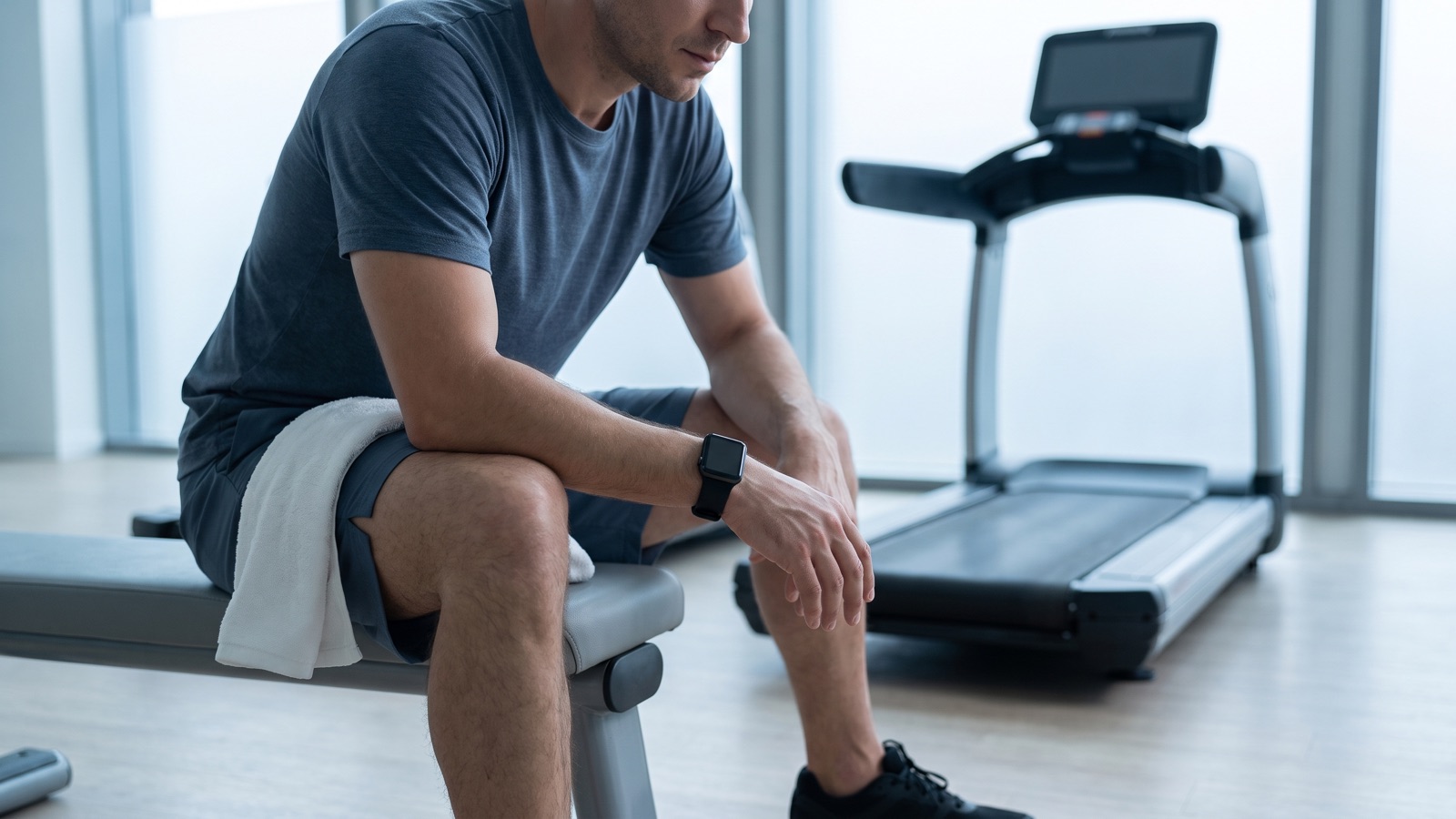
Two calorie guesses, built two different ways
Your treadmill's calorie number comes from arithmetic. It works from the weight you typed in and from its own record of the run, and nothing on the machine watches your body. The guide on whether treadmill calories are accurate shows where a figure like that goes wrong.
Your Apple Watch builds its number another way. Your heart rate is one of many things it uses, alongside your height, weight, age and gender and what its motion sensor feels. The stride your watch learns on outdoor runs feeds the figure too. The guide on Apple Watch treadmill accuracy shows how the watch turns that stride into an indoor distance.
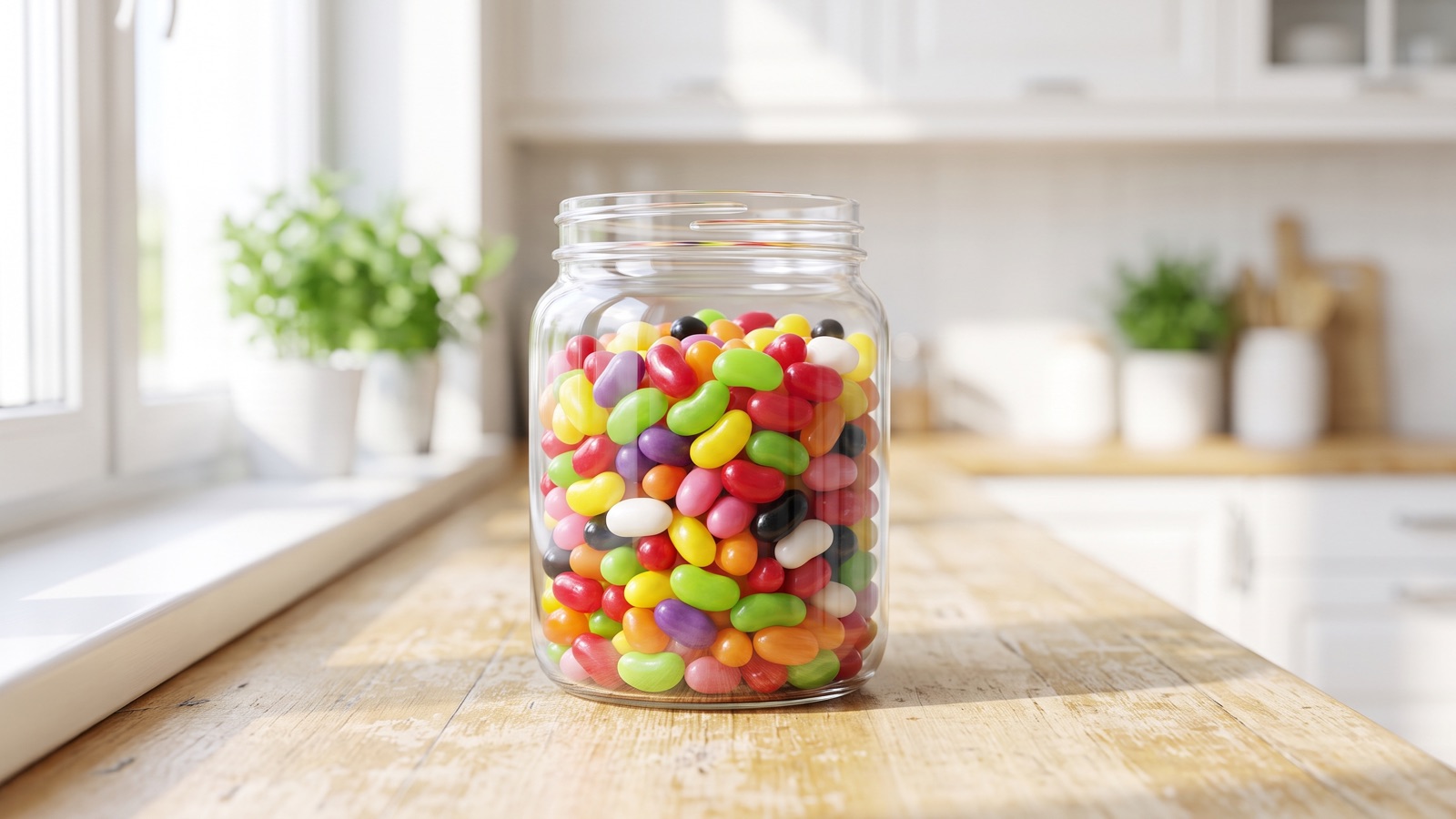
Picking the closer number is like judging two guesses at a jar of jelly beans. One friend says 480 and another says 560. The 80 between them tells you nothing about what is in the jar. Only counting settles it, and splitting the difference is still a guess. Your treadmill and your watch are two friends guessing at one jar, and the counting only happens in a lab.
What lab studies found for each number
A 2025 review pooled 56 studies that checked the watch's calories against a lab measurement of what people really burned. The watch's heart rate stayed inside the 10 percent line researchers use for a valid reading in every group. Its calorie figure fell outside that line in every group. Your pulse is only one ingredient. The watch still combines it with your height, weight, age and gender, so even a true pulse comes out as an estimate.
A 2017 study put 60 people through sitting, walking, running and cycling while they wore seven wrist devices. None of the devices got its calorie error under 20 percent. The Apple Watch had the lowest error of the seven, which made it the best of a weak group.
I found no study that tested a treadmill's calorie readout beside a watch against the same lab measurement, so there is nothing to set the watch's results against. Calling the watch closer is a guess about two guesses. Whichever one you write down, you are writing down an estimate.
Where a wrong belt speed lands
The treadmill's calorie figure rests on the speed you set. As far as I can find, nothing on the machine checks that speed against the belt. The watch never sees the speed you set. It leans on your heart rate among many factors, plus the stride it learned outdoors.
If the belt runs off its setting, I would expect the miss to be built into the treadmill's figure before any sum is done, and to land harder on it than on the watch's. Neither device looks at the belt itself.
One workout, two calorie readouts
Worked example with round numbers, not a run I logged.
The 10 percent floor comes from the 2025 review and the 20 percent floor from the 2017 study. I found no study figure that fits a runner's treadmill readout, so its miss stays blank. At the 20 percent floor, the watch's own miss is bigger than the whole gap between the devices.
What each calorie number is still good for
Each calorie number is useful against itself. Run the same workout on the same machine with the same watch, and a higher number means you worked harder. Do not average the two, because two guesses never add up to a count. The guide on entering your weight covers the one setting both devices ask you for.
Check the speed, not the calories
Belt speed is the one number in this whole picture that can be measured. Treadwell reads it from the moving belt itself, with your phone's camera and LiDAR sensor. It will not fix the calorie figure on either device. It gives you the true pace and distance your training rests on, and those are the numbers you act on.
On one treadmill I test on, the app's readings sat no more than half a percent from my handheld tachometer at all three settings I checked. That half percent grades our reading, not the machine's display. You need an iPhone Pro, because the app measures with the LiDAR sensor that only Pro iPhones carry. To see how far off your own machine might be first, the guide on checking your treadmill's distance walks through it.
Measure the speed under your calories
Find your treadmill's true belt speed before you trust any number built on it. Treadwell runs on an iPhone Pro with LiDAR.
 Scan with your iPhone Pro to get the app
Tested: in our tachometer tests the app read within about 2 percent of true belt speed.
Quick answers
Treadmill calories vs Apple Watch calories: which is closer? On treadmill calories vs Apple Watch calories, nobody can say which is closer. A 56-study review found the watch's calories off by 10 percent or more in every group. I found no study that tested a treadmill's readout beside a watch in the lab. Neither device looks at the belt, as far as I can find.
Why do my treadmill and Apple Watch calories not match? They are built from different inputs. The treadmill works from its own settings and the weight you entered. The watch works from your heart rate, your personal details and its motion sensor, among other factors. Two different methods rarely land on the same number, and the size of the gap says nothing about which one is nearer the truth.
Is Apple Watch more accurate than a treadmill for calories? Nobody has shown that it is. In a 2017 study of seven wrist devices, the Apple Watch had the lowest calorie error, and that error was still above 20 percent. I found no study that tested a watch and a treadmill's calorie readout against the same lab measurement, so the two cannot be ranked.
Should I average my treadmill and Apple Watch calories? Averaging two guesses only gives you a third guess. If both devices run high on the same workout, the middle of them runs high too. Pick one device and compare it with itself from run to run.
Sources.
- The watch review: Choe JP and Kang M, “Apple watch accuracy in monitoring health metrics: a systematic review and meta-analysis,” Physiological Measurement 46(4), 2025, PMID 40199339. It pooled 56 studies. Error in the calorie figure passed the 10 percent validity line in every subgroup, while heart rate stayed inside it in every subgroup.
- The 2017 study: Shcherbina A, Mattsson CM, Waggott D and colleagues at Stanford, “Accuracy in Wrist-Worn, Sensor-Based Measurements of Heart Rate and Energy Expenditure in a Diverse Cohort,” Journal of Personalized Medicine 7(2):3, 2017, PMID 28538708. Sixty volunteers wore seven wrist devices while sitting, walking, running and cycling, measured against breath analysis. No device got its calorie error below 20 percent, and the Apple Watch had the lowest overall error. The devices were 2017 models.
- How the watch builds its figure: Apple Support article 105048 says outdoor calibration teaches the watch your stride and can improve its calorie calculations.
- What the watch weighs in: Apple Support article 105002 says the watch uses your height, weight, gender and age to calculate calories, that heart rate is one of many factors, and that indoor runs also use the accelerometer.
- The weight you type feeding the treadmill's figure: the Precor C934 owner's manual (44132-107) and the Matrix T3x-03 treadmill manual from Johnson Health Tech. Each describes its own machine, not every treadmill.
- That nothing on the treadmill checks its speed against the belt: my reading of service manuals from Precor, Horizon and Matrix, and the Trackmaster FVX/TMX field service manual. None of them describes a part that reads the moving belt itself, and none says which speed value a calorie calculation uses. That a belt running off its setting would carry into the calorie figure is my own reasoning, not a documented mechanism.
- The half percent is my own tachometer check on 28 June 2026, on one treadmill, against a handheld contact tachometer. Two of the three readings came from saved recordings. The third is the calibrated app's reading as I reported it from the app's screen; that measurement was not saved. The half percent is the accuracy of the app's reading, and it says nothing about that treadmill's own display.
- The 500 and 430 calorie readouts are a worked example, not a run I logged. The 10 percent floor on the watch's 430 comes from the Choe and Kang review, and the 20 percent floor from the 2017 Shcherbina study. The treadmill's miss is left blank because I found no study figure that fits a runner's treadmill readout.
- I searched PubMed and the web on 24 September 2026 for a study that tested a treadmill's calorie readout beside a wrist device against the same lab measurement, and did not find one. That is what I found, not proof that none exists. The nearest hit was Schairer JR and colleagues, “Caloric expenditure during cardiac rehabilitation,” Journal of Cardiopulmonary Rehabilitation 18(4):290-4, 1998, PMID 9702608. It compared equipment display readings with measured oxygen uptake in 30 cardiac rehabilitation patients, but it pooled treadmills with three other machine types, so it gives no treadmill figure a runner could use.