Guides · Holding onto the treadmill while walking
What holding onto the treadmill while walking changes
You are 20 minutes into a steep incline walk, the display says 3.0 and 12, and your hands have drifted onto the rails. The walk feels easier, and the speed and incline on the display have not moved at all.
Holding onto the treadmill while walking leaves the speed, incline and calorie figures on the display where they were, but your body can do less of the work. In one study of 13 healthy adults, leaning back on the rails at a 10 percent incline cost about what walking hands free at 5 percent did.
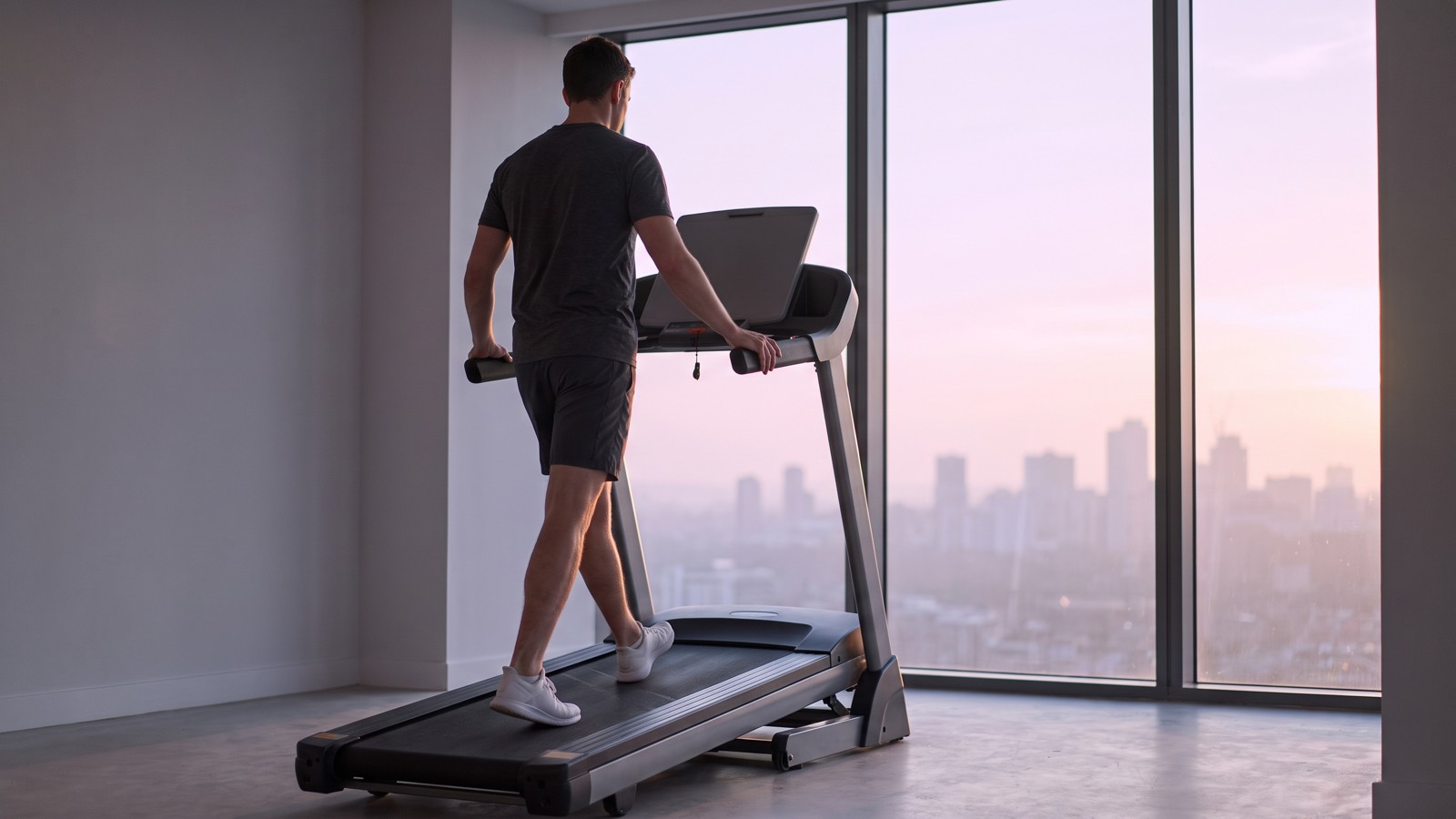
Your grip changes the work and leaves the display alone
The speed, incline and calorie figures on a display come from what you set and what you typed in. Where your hands sit is neither, so those figures read the same whether you hold on or swing your arms. For the calorie figure, the guide on what it is built from shows why it cannot see your grip.
What does change is how hard your body works to climb. On the last steep mile up to a lookout, a pair of trekking poles lets your arms push you up part of the slope. The trail is still one mile long and just as steep, yet your legs did less of the climbing. Holding the rails may work something like poles built into the machine. The display is the trail sign, and it does not know they are there.
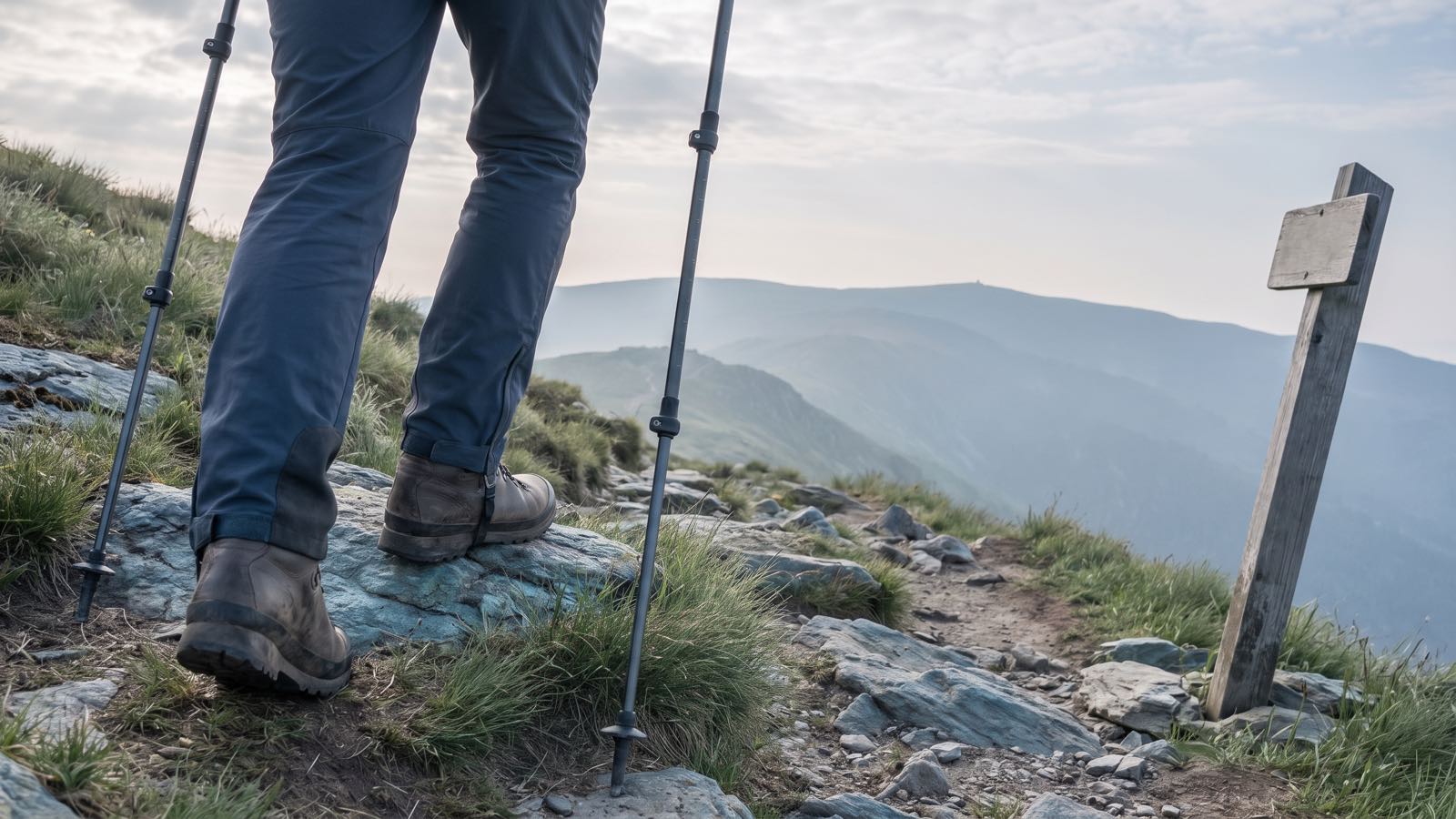
How much it takes off depends on how you hold
The size of the change differed with how they held on. In one study, 13 healthy adults walked at 2.5 or 3.0 mph up a 10 percent grade. Holding on while standing upright made no significant difference to their energy cost. Holding on and leaning back cut it to about what the same people spent walking hands free at 5 percent.
Energy cost of four ways to walk
Group averages from 13 healthy adults in one study, shown as a share of the hands-free walk at 10 percent. They describe that group and predict nothing about any one walker.
| How they walked | Share of the hands-free 10% walk |
|---|---|
| 10% incline, hands free | 100 |
| 10% incline, holding on, standing upright | 88, not a significant difference |
| 5% incline, hands free | 72 |
| 10% incline, holding on, leaning back | 68 |
Shares are worked out from the study's average energy cost per minute in each condition.
The grade was set to 10 for that whole lean-back walk. Two walks logged at the same grade can be two different workouts, depending on how you held on.
A second study tested a tight grip. Ten healthy adults aged 38 to 60 walked at three steady training efforts, each set as a share of their own ventilatory threshold measured in the lab. Gripping the rails lowered both their oxygen use and their heart rate compared with swinging their arms. In that group, the body worked less at the same speed and grade once the hands gripped the rails.
What your watch sees when you hold on
Indoors, a watch can work from how your arm moves, so an arm parked on a rail can give it less to count. The guide on what your watch is counting indoors shows why a still arm can throw off the distance in your log.
The number your hands cannot touch
The speed on the display belongs to the machine, so it is only as true as the belt turning under you. In one study, four treadmills in known condition carried walkers and runners while their belts were measured. On average the belts ran at 98 to 103 percent of the speed they were set to. On a 40-minute walk with the belt set to 3.0, that range would put anywhere from 1.96 to 2.06 miles under your feet, against the 2.00 you would cover if the belt ran exactly at its setting.
Whether the grade matches its number is a separate question, and the guide on how far an incline reading can drift takes it on. If your belt turns out to be off, the fix belongs with a technician or your manual.
Check the speed under your climb
Treadwell watches your belt through the camera and LiDAR sensor on your iPhone and tells you the speed it is really moving at. Start the belt at your walking speed and leave the deck empty. Then, from the floor at the side of the deck, point the phone down at the moving belt. Your grip still shapes how hard the climb is, and the 3.0 underneath it becomes a speed you have measured.
Measure the belt under your hill walks
Take one reading at your climbing speed before your next walk goes in the log. The app relies on the LiDAR sensor in an iPhone Pro.
 Scan with your iPhone Pro to get the app
Tested: in our tachometer tests the app read within about 2 percent of true belt speed.
Quick answers
Does holding onto the treadmill while walking matter? Holding onto the treadmill while walking leaves the speed, incline and calorie figures on the display where they were, but your body can do less of the work. In one study of 13 healthy adults, leaning back on the rails at a 10 percent incline cost about what walking hands free at 5 percent did.
Is holding on upright the same as leaning back? It depends on the lean. In the 13-adult study, holding on while upright did not change the cost of a 10 percent walk by an amount the researchers could call significant, and only the lean-back drop was significant. The study did not measure how hard anyone pushed on the rails.
Does holding onto the treadmill change the calories it shows? No. A hands-on walk and a hands-free walk at the same settings show the same calorie count on the display, so a log built from that figure cannot tell them apart.
Sources.
- Handrail use on a 10 percent incline: Hofmann C, Dougherty C, Abkarian H, Fox M, Juris P, "The Reduction of Metabolic Cost While Using Handrail Support During Inclined Treadmill Walking is Dependent on the Handrail-use Instruction," International Journal of Exercise Science 7(4):339-345 (2014), doi 10.70252/ECYF1853. Thirteen healthy adults walked at 3.0 mph for men and 2.5 mph for women, five minutes per condition, with energy cost worked out from breath gas analysis. Against the hands-free 10 percent walk, holding on upright came out 12 percent lower, which the paper reports as not significant (P = 0.135), and leaning back came out 31.8 percent lower (P < 0.001). Leaning back at 10 percent did not differ significantly from walking hands free at 5 percent. The first author is at the Cybex Research Institute. The shares in the table are our arithmetic from the paper's group means.
- Gripping the rails at training effort: Berling J, Foster C, Gibson M, Doberstein S, Porcari J, "The effect of handrail support on oxygen uptake during steady-state treadmill exercise," Journal of Cardiopulmonary Rehabilitation 26(6):391-394 (2006), PMID 17135860. Ten healthy volunteers aged 38 to 60 held steady efforts at 75, 85 and 95 percent of the speed and grade at their own ventilatory threshold. Gripping the handrails gave significantly lower heart rate and oxygen uptake than free arm swing at all three efforts (P < .05).
- What a calorie count rests on: the Precor C934 owner's manual, page 30, ties its calorie count to the weight you enter. That the figure cannot tell where your hands are is our reading of that design, and it matches our guide on treadmill calories.
- Watches and the rails: Apple Support article 105002 describes the watch leaning on its accelerometer for indoor runs. The Garmin Forerunner 165 owner's manual, in its Indoor Activities section, warns that holding the treadmill's handrails reduces accuracy.
- How close belts run to their setting: a 2021 paper by Willwacher S and colleagues in Scientific Reports, volume 11, article 2244. The team put walkers and runners on four laboratory treadmills kept in known condition, and average belt speed on each came out close to 98 to 103 percent of the chosen setting.
- Made up for illustration: the 20 minutes, the 3.0 and the 12 in the opening, the 40-minute walk and the climb with trekking poles. The distance arithmetic is ours.