Guides · Tempo run on a treadmill
Tempo run on a treadmill: why a belt a few percent off matters
Last Saturday you held 7:30 miles on the river path for twenty minutes and finished in control. Tonight you press 8.0 for the same tempo, and by minute 15 your breathing has come apart. You did not lose fitness in five days. Either the room did that, or the belt did.
A treadmill holds one speed for you, so your tempo stays steady if the belt runs what it shows. The margin is thin. In one lab study of ten trained men, about 3 percent more speed turned steady lactate into rising lactate. In another study of four treadmills, one badly worn, belts ran 98 to 103 percent of their setting. The belt alone can push a tempo over that line.

The line under a tempo is narrow
A tempo is supposed to sit close to a line without crossing it. Below the line, the lactate in your blood rises to a level and stays there. Just above it, the level does not settle.
In a 2021 lab study, ten well-trained men ran long, steady efforts on a treadmill. One speed held their lactate steady through runs of up to 30 minutes. About 3 percent faster, their lactate sat higher and kept rising.
The same researchers tracked a second marker of the line, and it was narrow too. Scientists still argue over which marker is the true one.
That 3 percent belongs to ten trained men in one lab. Your own line sits at your own speed. What the study shows is the scale: a tempo and a run that quietly keeps getting harder can be one small speed step apart.
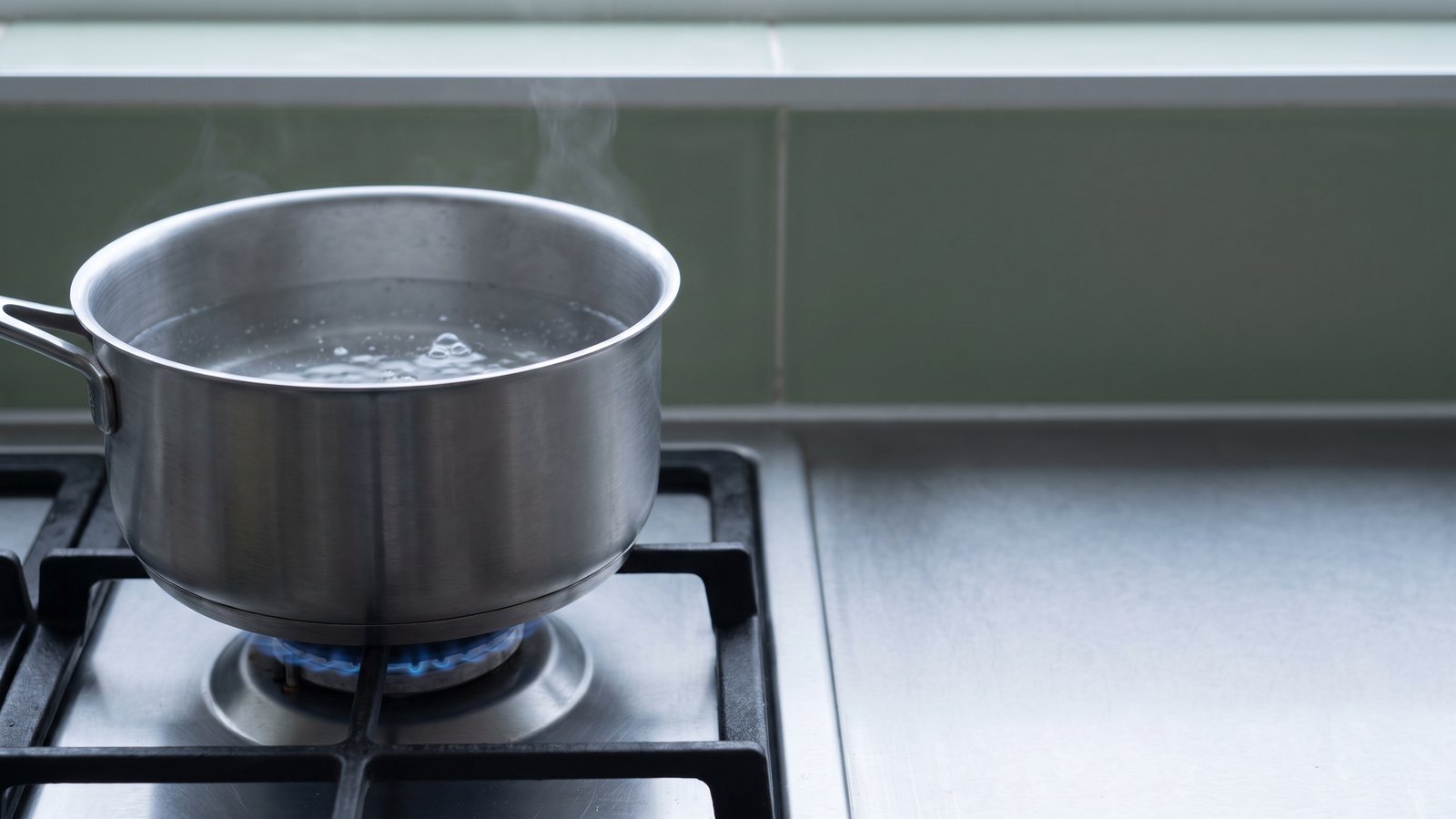
A simmer sits just under the boil, and one small nudge of heat tips it over. Your tempo is the simmer. A belt running a few percent fast is that nudge, and you never touched a thing.
A belt can miss by about that much
The 8.0 you pressed is a request, repeated back to you on the screen. Nothing in that number comes from watching the belt move. A 2021 study tested four treadmills, including one whose belt and deck were badly worn. Average belt speed came out anywhere from about 2 percent under the setting to about 3 percent over it.
A miss of up to 3 percent, the size that study's belts spanned, is about as wide as the step that separated steady lactate from rising lactate in the runners. On a treadmill, the belt by itself can move a tempo across that step.
Your 8.0 tempo on three belts
Where an 8.0 tempo really lands
Three made-up belts, all showing 8.0 and a 7:30 mile. I measured none of them.
| Belt | Real mph | Real pace per mile | What the run becomes |
|---|---|---|---|
| Right on the setting | 8.00 | 7:30 | The tempo you planned |
| 2 percent under | 7.84 | 7:39 | Easier than planned, logged as 7:30 |
| 3 percent over | 8.24 | 7:17 | About one lab step faster than planned |
On the belt running 3 percent over, you are doing 7:17 miles. If your tempo sat just under your line, it is now about a step past it, and the run keeps getting harder. That is the night you stop at minute 15 and decide your fitness has gone. On the belt running 2 percent under, you finish fresh and write down 7:30 miles you never ran. Plan a race from that log, and you start faster than your training really went.
Tempo on a treadmill vs outside
Two things separate an indoor tempo from the river path, and the usual answers cover one. The first is the room. You make no breeze on a belt, so heat builds up faster. When a 2019 review pooled 34 studies, heart rate and perceived effort came out higher on a motorized belt than overground at the faster steady speeds. The guides to treadmill pace vs road pace and to a higher heart rate on the treadmill cover that side.
The second is the belt, and no pace conversion can see it. Neither can your watch. With GPS off it estimates pace from your arm and stride movement, which is why a watch on a treadmill never sees the belt. A 1 percent incline is the usual way to even out indoor and outdoor effort, and it takes the speed on trust.
Learn what 8.0 does on your machine
You do not have to guess what the belt really ran. Treadwell tells you what 8.0 really runs on your machine, and it needs an iPhone Pro, because the reading comes from the phone's LiDAR sensor and camera. Set the deck flat, run the belt empty at your tempo setting, and read it from the floor beside the deck. If the belt runs fast, you press a lower number and the tempo you train is the one you planned. Any change to the machine itself is a job for its owner's manual or a technician.
Run your tempo at the pace you meant
Measure the belt at your tempo setting, then press the number that really gives you your pace. Treadwell works on an iPhone Pro, the model with the LiDAR sensor the measurement depends on.
 Scan with your iPhone Pro to get the app
Tested: in our tachometer tests the app read within about 2 percent of true belt speed.
Quick answers
Is it okay to do a tempo run on a treadmill? A treadmill holds one speed for you, so your tempo stays steady if the belt runs what it shows. The margin is thin. In one lab study of ten trained men, about 3 percent more speed turned steady lactate into rising lactate. In another study of four treadmills, one badly worn, belts ran 98 to 103 percent of their setting. The belt alone can push a tempo over that line.
Is a tempo run on a treadmill harder than outside? It can be. Indoors you lose the breeze that cools you. Separately, pooled lab data from 34 studies show heart rate and effort running higher on a belt at quicker steady paces. The belt adds a reason of its own. If it turns faster than its setting, the indoor tempo really is quicker than the one you ran outside.
What speed should my tempo run be on a treadmill? Press the speed that converts to the tempo pace you already run. No chart can pick that pace for you. The setting only turns into that pace when the belt runs true, so check the belt once at that speed.
Can I trust my Garmin pace on a treadmill tempo? No, not as a check on the belt. With GPS off, a watch works out your pace from how your arm and stride move, so it never sees how fast the belt turns. When the watch and the screen agree, neither one has looked at the belt.
Sources.
- The narrow line: Nixon RJ, Kranen SH, Vanhatalo A and Jones AM, Eur J Appl Physiol 121(11):3133-3144, 2021 (PMID 34351531). Ten well-trained male distance runners; maximal lactate steady state at 15.2 km/h and critical speed at 16.4 km/h on average. At 0.5 km/h above the lactate steady state, blood lactate was higher and still rising while oxygen uptake did not change from minute 10 to 30. Oxygen uptake rose to its maximum at about 0.4 km/h above critical speed and held steady at about 0.5 km/h below it. The percentages are my own conversions (0.5 of 15.2 is about 3.3 percent).
- What a tempo run is: Haugen T, Sandbakk Ø, Seiler S and Tønnessen E, Sports Med Open 8:46, 2022 (PMID 35362850), a review of world-class distance runners that calls a tempo run a threshold run.
- How far belts landed from the setting: Willwacher and colleagues (2021), Scientific Reports, volume 11, article 2244. The study tested four treadmills, one a relatively low-cost, non-instrumented model and one with a substantially worn belt and bed, carrying walkers and runners; average belt speed stayed between about 98 and 103 percent of target.
- Treadmill against ground: Miller JR and co-authors, Sports Med 49(5):763-782, 2019 (PMID 30847825), a meta-analysis of 34 crossover studies. Compared with running overground, treadmill heart rate and perceived effort came out higher at the faster submaximal speeds and lower at the slower ones.
- Why outdoor running cools you better: you generate your own wind. Yamashita N and co-authors, J Appl Physiol 137(3):554-568, 2024 (PMID 38867667).
- Watch pace indoors: the Garmin Forerunner 165 owner's manual, Indoor Activities, says that with GPS off, speed and distance come from the watch's accelerometer.
- The river path, the 8.0 setting and the three belts are invented for illustration, and the pace arithmetic in the table is mine.