Guides · Is your 12-3-30 treadmill speed really 3 mph?
Is your 12-3-30 treadmill speed really 3 mph?
You have been doing 12-3-30 for months. You set the same three numbers every time, and the routine has earned its place in your week. Two of those numbers are settings you handed to a machine.
The 3.0 in 12-3-30 is a setting, not a measurement. The display reports the speed the machine was asked for, and nothing on the machine checks the belt against it, so a belt running a few percent slow shows a rock-steady 3.0 for the whole half hour while you cover less ground than 3.0 promises.
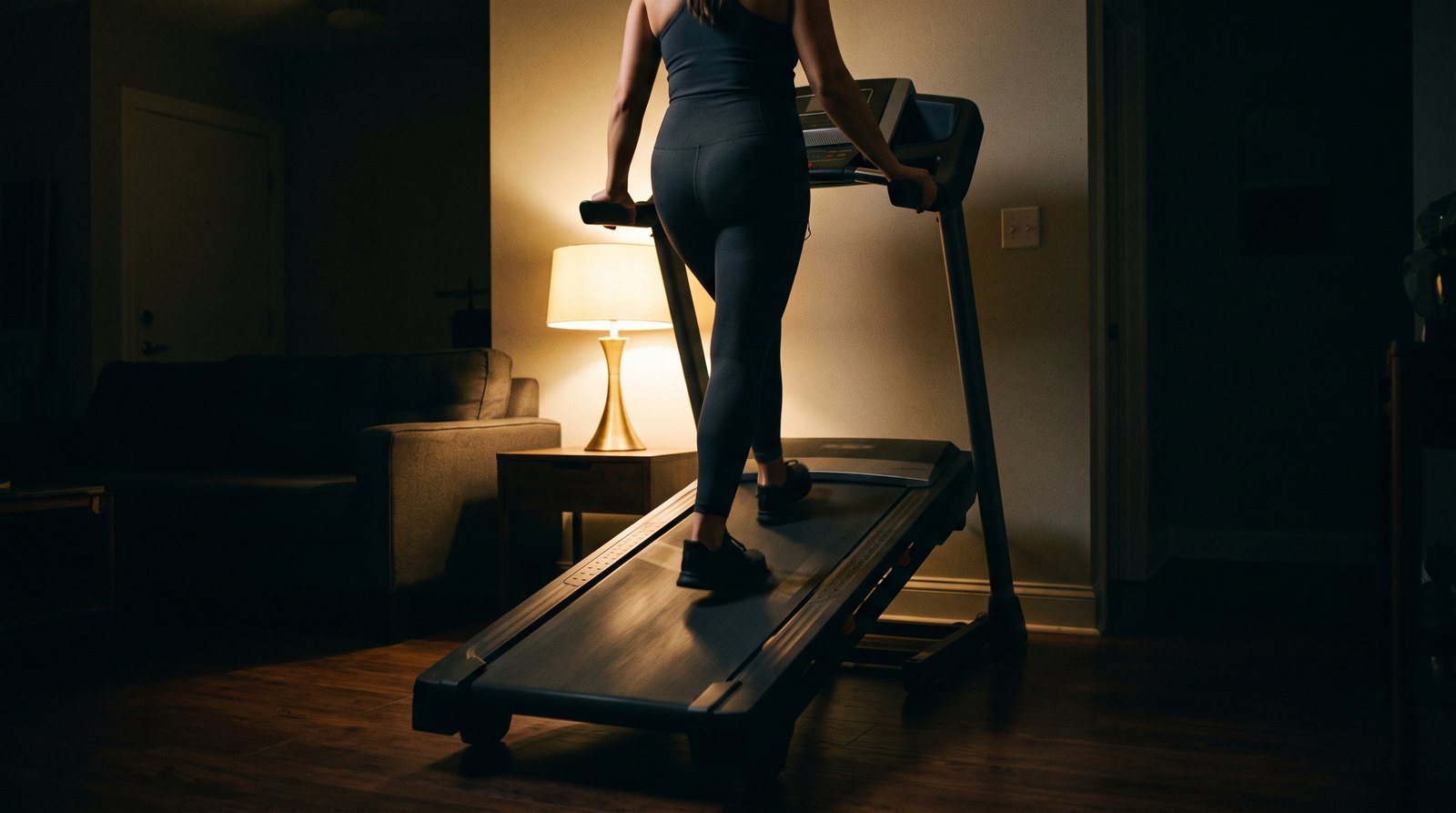
This workout has no way to catch a bad number
Running gives you a few outside checks, like a race clock and a route you know. 12-3-30 has none. The whole prescription is two settings and a timer, and you follow it precisely because that is the point. There is no pace you are chasing and no distance you set out to cover. You hand over the numbers and trust the machine to hand you back a workout.
That leaves the workout exposed. If the belt runs slow, nothing in the session tells you. Nothing in the room is measuring the belt, and the distance readout at the end is part of the machine's own report, while the ground you actually covered followed the belt.
The research on this workout took the display at face value
The workout has been studied, and the studies inherited the same blind spot you have.
One peer-reviewed study put fourteen people through it and measured their oxygen use with a metabolic cart. That cart was calibrated every day of testing. The treadmill's 3 mph and 12% were recorded as set, and the paper says nothing about checking them. A second report, industry-supported rather than peer-reviewed, ran seventeen participants the same way and also took the displayed settings as given.
Neither team did anything unusual. Neither study says a word about checking the machine. That is the blind spot.
So the research can tell you what walking at 3 mph on a 12% grade costs a body. It cannot tell you that any particular machine delivered 3 mph on a 12% grade.
What a slightly slow belt costs you
Walking speeds are small numbers, which makes a percentage easy to shrug off. Put it in the units you actually count.
Thirty minutes at a shown 3.0 mph
The same session on an honest belt and on belts running a little slow.
| If the belt is really | Your pace was | You covered | Short of 1.50 |
|---|---|---|---|
| 3.00 mph, honest | 20:00 /mi | 1.50 mi | 0.00 mi |
| 2.91 mph, 3% slow | 20:37 /mi | 1.46 mi | 0.04 mi short |
| 2.85 mph, 5% slow | 21:03 /mi | 1.43 mi | 0.07 mi short |
This is a worked example, not a logged test. It applies two error sizes to one speed setting, and nobody walked these miles. Distances are rounded to two decimals and paces to the nearest second. Five sessions a week on the 5% belt is over a third of a mile a week that the log claims and the ground does not.
How far off can a belt be? Laboratory work on four types of treadmill found belt speed landing between 98 and 103% of what the machine was told. The walking speeds in that test drifted less than the running ones. A few percent is the honest size of the question. One machine I measure regularly, at a running speed, has landed well outside that range. Its display showed 2.3 miles for a run that was really 2.0.
None of that ruins the workout. Walking uphill for half an hour is still walking uphill for half an hour. It does mean the number you are tracking week to week may be measuring the machine's opinion rather than your progress.
What about the 12%?
The belt's speed can be checked, because the belt's surface is right there to be measured. Incline is a different story. I could not find a published check of how far a treadmill's displayed grade sits from its true slope, so anyone who tells you your 12% is really 9% is guessing. Treat the incline as unverified rather than wrong, and check the setting you can.
Slow belts are the easy ones to measure
The faster a belt runs, the more its surface blurs to a camera, so a walking belt is the easy case.
On one machine I checked with a handheld tachometer, the two lowest settings I tested came out at 2.39 and 3.59 mph, so the 12-3-30 speed sits between them rather than at one of them. The app's reading agreed with the tachometer to within half a percent at both. That number describes how closely the reading matches the tachometer. It says nothing about what that machine's display was doing.
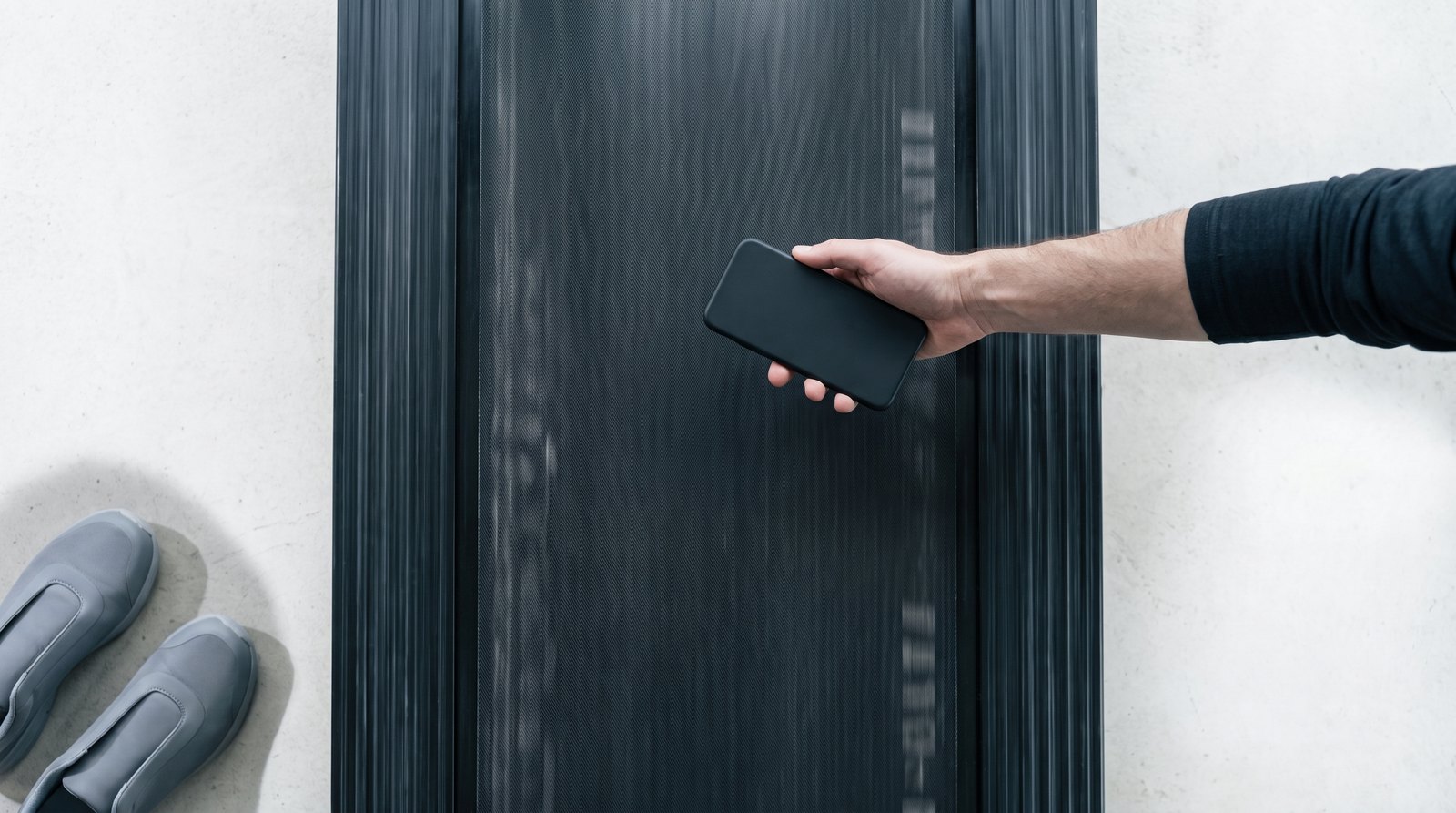
How to check your 3.0
A stopwatch will do it if you have patience. Measure the belt's full loop with the machine off, seam back round to seam, or any mark on the belt you can pick out. Then count how many times that mark passes in a minute at 3.0. Passes per minute times the loop length in feet, times 60, divided by 5,280, is your mph. Measuring the loop is the slow part.
Treadwell does the same check in seconds. Stand beside the machine, point an iPhone Pro at the running belt, and it reads the surface directly. The number you typed never enters into it. Both methods read the belt with nobody standing on it, and what your own footfalls do on top of that is its own question. Check the one setting you can, once, and you will know whether your 1.5 miles is 1.5 miles.
Check the number your routine runs on
Treadwell measures your treadmill's real belt speed in seconds, so your 3.0 is measured rather than assumed. Requires an iPhone Pro with LiDAR.
Quick answers
Is the 12-3-30 treadmill speed really 3 mph? The 3.0 in 12-3-30 is a setting, not a measurement. The display shows the number the machine was asked for, and nothing on the machine checks the belt against it, so a belt running a few percent slow shows a steady 3.0 the whole time while you cover less ground than 3.0 promises.
How far is the 12-3-30 workout? At a true 3 mph for 30 minutes it is 1.5 miles. That figure is only as good as the speed, because the ground you cover follows what the belt really did rather than what the display was told.
Has anyone checked whether the 12-3-30 machine settings are accurate? Not in the published work on this workout. The one peer-reviewed study calibrated its own metabolic measuring equipment daily and took the treadmill's 3 mph and 12% at face value, and a second industry-supported report did the same. They measured what that workload costs a body, not whether the machine delivered it.
Can you check a treadmill's speed at walking pace? Yes, and walking pace is the easy case, because the slower a belt runs the less its surface blurs to a camera. On one machine I checked with a handheld tachometer, the app's reading agreed with it to within half a percent at 2.39 and 3.59 mph.
Sources.
- Fourteen completers walked the 12-3-30 protocol while a metabolic cart, calibrated daily, measured their expired gas. The study recorded the treadmill's displayed 3 mph and 12% grade as the test conditions and reports no independent check of either. Wong et al., "An Exploratory Study Comparing the Metabolic Responses between the 12-3-30 Treadmill Workout and Self-Paced Treadmill Running," International Journal of Exercise Science 18(6):56-64 (2025).
- Seventeen participants took part in a second study of the same workout, which also used the machine's displayed settings with no stated verification. It was published as a research report in ACE CERTIFIED, March 2025, a certifying body's own magazine with that body's support, rather than in a peer-reviewed journal. It is a separate piece of work from the study above.
- That neither study checked the treadmill is my own reading of their published methods. Neither team criticized itself on that point.
- Belt speed measured between 98 and 103% of the commanded speed on four types of treadmill comes from Willwacher et al., Scientific Reports 11:2244 (2021). The four included two instrumented laboratory machines, and the paper documents one of the four as heavily worn. Walking speeds were tested alongside running speeds, with the smaller deviations reported at the walking speeds.
- Our research found no manufacturer accuracy specification for incline and no published study reporting a measured gap between displayed grade and true slope. One biomechanics study checked its treadmill's incline with an inclinometer once as a setup step and published no resulting figure. That is an absence in the sources we could reach. It is not evidence that machines report grade correctly.
- The 2.3-mile display for a true 2.0 is my own run on a treadmill I measure regularly, at a running speed rather than a walking one, and I checked it against the tachometer table I keep for that machine.
- The 2.39 and 3.59 mph figures are handheld tachometer readings I took at the two lowest settings I tested on one treadmill, in the same session as the app's reads. The half a percent is how closely the app's reading of the belt agreed with that tachometer. It describes the app's measurement. That machine's display was not assessed in this test.
- That slower belts are easier to measure than fast ones is ordinary camera physics, and our own testing bears it out: a fast surface blurs, and the blur is what limits a camera-based reading.
- The thirty-minute session at a shown 3.0 mph is a worked example. It applies 3% and 5% errors to one speed setting, and nobody walked those miles to log them. Each shortfall in the table is the difference between the rounded distances shown.